How Much Do YouTube Ads Cost in 2026? A Realistic Breakdown

How Much Do YouTube Ads Cost in 2026?
YouTube ads cost between £0.01 and £0.10 per view for skippable in-stream formats. CPM sits at £4 to £10 for most channels. Those ranges are wide enough to be almost meaningless without context, and "it depends" is not an answer anyone came here for.
So let's get specific. What you actually pay comes down to five things: ad format, targeting specificity, niche, time of year, and creative quality. Two channels in the same space can pay wildly different rates. One has a compelling ad with tight targeting. The other has a generic video aimed at everyone. Same platform, same audience, sometimes four times the cost difference.

Every format charges differently. Getting this wrong is one of the fastest ways to burn through a channel growth budget.
Skippable in-stream is where most channels should start. You only pay when someone actually watches, so your budget self-selects toward people who chose to engage with your content. Non-skippable and bumper formats guarantee your full message gets seen but charge per impression whether the viewer paid attention or scrolled away mentally at second two.
Shorts ads are the cheapest option on the platform right now. At £2 to £6 CPM you reach more people per pound than any other format. The trade-off is obvious. Shorts placements are mobile-first, short-attention-span environments. They work well for channel awareness and discovery. They do not work well for communicating anything that requires more than six seconds of patience.
What makes your costs go up or down
Niche competition is the biggest factor and you cannot control it. Channels in finance, tech, and legal adjacent spaces pay more because advertisers in those industries are bidding aggressively for the same eyeballs. Entertainment, lifestyle, and general interest channels pay less because the competition for that audience is less intense.
Geography matters more than most channels expect.
US audiences cost more than UK audiences. UK costs more than most of Europe. Europe costs more than South America or Southeast Asia. If your content appeals globally, mixing geographic targeting can bring your blended CPM down considerably without sacrificing meaningful reach.
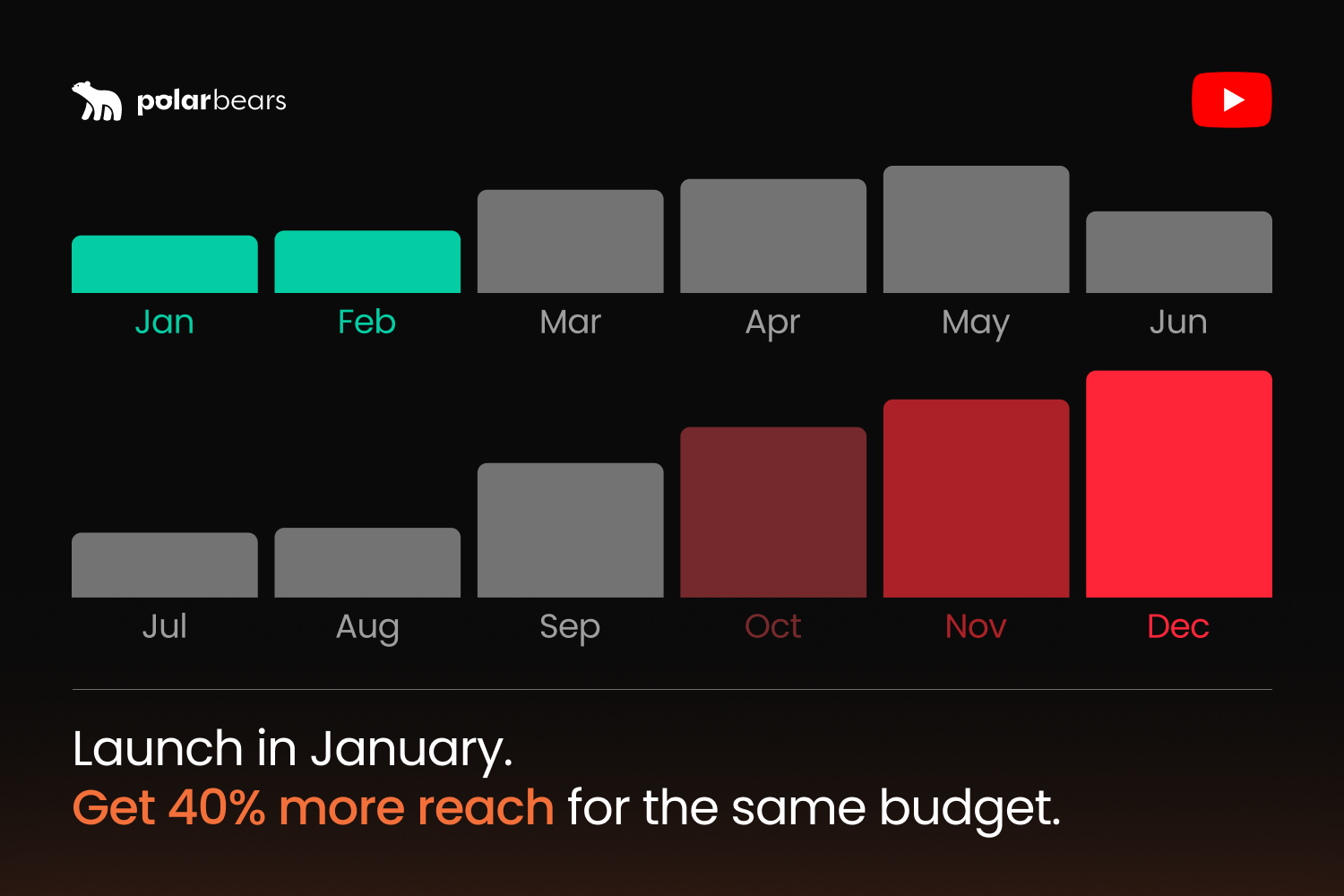
Seasonality is predictable enough to plan around.
January and February are cheap. Advertiser budgets reset after the Q4 spending surge and competition for attention drops significantly. July and August dip again. October through December gets expensive, with December CPMs sometimes doubling what you would pay in January. If you have any flexibility on timing, launching a channel growth campaign in Q1 gives you 30 to 40 percent more reach for the same money.
Creative quality is the factor that deserves far more attention than it gets.
YouTube's auction does not just reward the highest bidder. It rewards the best ads. A view rate above 35 to 40 percent signals to the platform that your content keeps people watching, and YouTube responds with better placements at lower prices. Poor-performing ads get worse positions and pay more for them. We have seen the difference hit two to four times on the same audience with identical targeting. The only variable was the creative itself.
Realistic budgets for channel growth
Start with testing regardless of your eventual budget. Two weeks at £15 to £20 a day tells you which creative and targeting combinations actually drive subscribers and watch time before you commit serious money. Scaling a tested winner is smart. Scaling a guess is how channel growth budgets disappear.
For channels just starting with paid, £300 to £500 a month is enough to test three to four creative variations across two to three audiences and find a combination that works. Small to mid-sized channels typically land at £500 to £3,000 a month once they have found their winning formula and want to sustain momentum. Larger media companies and networks running multi-channel campaigns go significantly beyond that, but that is a different conversation entirely.
At The Polar Bears, our paid media packages start at Launch, covering account setup, campaign strategy, and campaign setup. Channels wanting ongoing management and optimisation typically move to Scale or Accelerate from there. But even the largest channel networks benefit from a structured testing phase before going heavy on spend.
Estimating your own costs
Use this quick formula: target audience size multiplied by your niche CPM divided by 1,000. That gives you the cost of reaching that audience once.
Here is an example. You want to reach 300,000 people in the UK interested in your content niche with a skippable ad. At a mid-range CPV of £0.04 and an estimated 30 percent view rate, around 90,000 people actually watch your ad. Cost: roughly £3,600. For bumper ads hitting the same 300,000 at £10 CPM you would pay £3,000, but with no guarantee of meaningful engagement beyond the six-second exposure.
These are rough numbers. Actual costs shift with targeting specificity, competition, seasonality, and creative quality. But they are more useful as a planning tool than saying somewhere between £0.01 and £0.30 depending on factors.
The costs nobody mentions upfront
Ad spend is only part of the picture.
You need video production. Even basic YouTube ads need to be watchable, which means decent audio, reasonable visuals, and an opening that does not get immediately skipped. Production ranges from £500 for a simple talking-head setup to £10,000 plus for commercial-grade work. The sweet spot for most channels sits around £1,000 to £3,000 per ad. Budget 20 to 30 percent of your total paid investment for creative production and do not treat it as an afterthought. Creative is the single biggest variable in cost efficiency and most channels barely invest in it.
If you are working with an agency for campaign management, fees typically add 10 to 20 percent on top of ad spend or a flat monthly rate. Not mentioning this when discussing how much YouTube ads cost is misleading, but most guides skip it entirely. Factor it into your planning so the total number does not surprise you three months in.
FAQ
How much does a YouTube ad cost?
£0.01-£0.10 per view for skippable formats, £4-£10 CPM for impression-based formats. The exact number depends on targeting, industry, format, and creative quality. Most businesses start with £10-£50 per day.
How much are YouTube ads in the UK?
UK costs run slightly below US rates. CPC ranges from £0.10-£0.30 depending on industry. CPMs average £4-£8 for most UK audiences. Finance and tech are at the higher end. Lifestyle and entertainment sit lower.
How much does it cost to get 1,000 views on a YouTube ad?
For skippable in-stream ads, roughly £10-£100 depending on industry and targeting. For bumper ads, reaching 1,000 people costs £8-£15 but doesn't guarantee they engaged beyond the 6-second view. The two numbers measure different things.
What is a good CPV for YouTube ads?
£0.03-£0.06 is solid for most industries. Below £0.03 is excellent and usually means your creative outperforms average. Above £0.10 points to either very competitive targeting (finance, legal) or creative that needs improvement.
How much should a small business spend on YouTube ads?
£300-£500 a month is enough to test properly. Start with £15-£20 per day, run multiple creative and audience combinations for two weeks, and only scale once you've found a clear winner. Jumping to high spend without testing is the most common way small businesses waste their YouTube budget.
How much does a 30-second YouTube ad cost?
A 30-second skippable ad costs £0.01-£0.10 per view (you only pay if someone watches the full 30 seconds or interacts). A 30-second non-skippable on YouTube TV costs £6-£10 CPM. Production of the ad itself ranges from £500 for basic to £10,000+ for high production value.
Want a clear picture of what YouTube ads would cost for your business?
If you liked that why not take a look

What Security and Compliance Should a YouTube Agency Have?
Your agency holds your accounts and data. What SOC 2, ISO 27001, GDPR and Cyber Essentials actually mean, and what to ask before you sign.
Should Your YouTube Agency Work With Your Competitors?
Your agency might run your rival's channel too. Why agency conflict of interest matters, how good agencies keep competing clients apart, and what to ask.
What Should a YouTube Agency Put in Writing?
Most YouTube agencies dodge written commitments. What a good agency should promise: response times, reporting cadence, and fixing underperforming videos.
What Data Can You Take When You Leave a YouTube Agency?
Can you take your analytics, dashboards and custom reports when you leave a YouTube agency? What data is yours, what is not, and how to avoid lock-in.
Who Owns Your YouTube Channel When You Use an Agency?
You should own your YouTube channel, not your agency. How channel ownership works, owner vs manager access, and how to keep control on exit.
YouTube Image Posts: The New Format Most Brands Are Ignoring
YouTube image posts are moving into the main feed in 2026. What they are, why they keep your channel visible between uploads, and how brands should use them.

Ready to maximise your YouTube revenue?
Get in touch and let’s begin exploring your channel’s hidden potential.