AI-Generated Content on YouTube: The 2026 Rules


AI-Generated Content on YouTube: The 2026 Rules
A lot of brands get YouTube's AI rules backwards. They worry that using AI at all will get them flagged, then either avoid it entirely or, worse, mass-produce AI videos and quietly walk into a demonetisation.
Both reactions miss what the rules actually care about.
YouTube does not penalise you for using AI. It cares about two different things: whether your content could mislead someone into thinking something real happened that did not, and whether the content has genuine value or is just churned-out filler. Get those two right and AI is a normal, allowed part of how you make videos. Get them wrong and you are looking at a disclosure label at best, and suspension from the Partner Program at worst.
So this is the clear version. What you have to disclose, what you do not, where the label shows up, the line that gets content demonetised, and the likeness rules brands especially need to know. For the wider picture, our guide to building a YouTube growth engine sets the strategy this sits inside.
The fear is the wrong fear
Start by separating two questions, because brands constantly merge them. The first is "did you use AI". The second is "could this mislead a viewer, and does it add value". Only the second pair matters to YouTube.
The policy is about realistic synthetic content and meaningful value, not about whether a tool touched your video. You can use AI all day for scripts, editing, ideas, and captions with no label and no penalty. What triggers the rules is making realistic content that fakes something real, or flooding the platform with low-effort, near-identical videos. Once you frame it that way, the rules stop being scary and start being obvious.
What you must disclose
YouTube requires you to disclose when realistic content is made with altered or synthetic media, including generative AI, which simply means AI that creates new images, audio, or video. The disclosure is a toggle you switch on when you upload, and it tells viewers the content is not what it appears to be.
The clearest cases involve realism that could deceive. You must disclose when a video makes a real person appear to say or do something they did not, uses a synthetic or cloned voice of a real person, shows a realistic event or place that never happened, or digitally alters real footage to depict something that did not occur. The test is deception, not technology. If a reasonable viewer could be fooled into thinking it was real, you disclose.
What you do not have to disclose
This is the part that settles the nerves. The everyday ways you actually use AI are explicitly fine, no label needed.
YouTube does not require disclosure for using AI as a production aid, such as generating scripts, content ideas, or automatic captions. It also does not require it for content that is clearly unrealistic, animated, or stylised, or for minor edits like colour correction and beauty filters that do not mislead anyone about what happened. So the majority of day-to-day AI use across a brand channel, the writing help, the editing speed-ups, the idea generation, needs no disclosure at all. The label is reserved for realistic fakery, not for using modern tools.
Where the label appears, and what it does
When disclosure is required, YouTube adds a label, and where it shows up depends on the topic. For most videos, the label sits in the expanded description, where a curious viewer can find it. For sensitive subjects like health, news, elections, and finance, a more prominent label appears on the video itself, because the cost of deceiving viewers there is higher.
The reassuring part for brands is what the label does not do. Disclosing altered or synthetic content does not limit your audience or affect your eligibility to earn money. The label is about honesty with viewers, not a penalty. And worth knowing: YouTube can detect undisclosed synthetic content and apply the label itself, and once it does, you cannot remove it. So disclosing yourself, accurately, is always the better position than being caught not doing it.
The monetisation line: value versus slop
Here is the line that actually costs brands money, and it is separate from disclosure. In July 2025 YouTube updated its monetisation policy to target mass-produced and repetitious content, now called "inauthentic content." The point is that monetised content has to be original and add value.
AI-assisted content is fully monetisable when it does that. A video that uses AI in production but delivers real commentary, storytelling, or insight earns like any other. What gets demonetised is the opposite: channels churning out near-identical, templated videos with no human value, the so-called AI slop. YouTube has been actively removing monetisation from those channels, and creators who repeatedly publish that kind of content can lose Partner Program access entirely, which means losing ad revenue across every video, not just one. The safe rule for a brand is simple: use AI to make better content faster, never to make more empty content cheaper. Our guide to the metrics that actually matter is a good check on whether content is adding value or just adding volume.
Likeness, voice, and the privacy rules
Brands working with talent, presenters, or recognisable figures need to know this layer. Beyond the disclosure rules, YouTube lets people request removal of synthetic content that simulates an identifiable individual, including their face or voice, through its privacy process. So an AI clone of a real person is not just a disclosure issue, it is a removal risk if that person objects.
For a brand, the takeaway is to treat AI versions of real people as a rights and consent matter, the same way you would treat any use of someone's image or voice. Get permission, document it, and disclose. This is exactly the kind of rights and content question our commercial partnerships work deals with for rights holders.
How brands should use AI on YouTube
Put the rules together and a clear, safe playbook falls out. Use AI freely for production: scripts, editing, ideas, captions, thumbnails. Disclose whenever you make realistic content that could mislead, especially anything involving a real person's face or voice. Never mass-produce near-identical videos to game volume, because that is the fast route to demonetisation. And keep a human hand on the value, since that is the single thing the platform is protecting.
Run across a portfolio of channels, staying the right side of these rules consistently is an operations job, not a one-off decision. At The Polar Bears we manage over two million videos for brands and broadcasters, so AI policy compliance at scale is part of the day job. The reporting behind it is Powered by Vixxi, the platform we license to consolidate YouTube, Google Ads, and Google Ad Manager into one workflow, which helps us see monetisation status across a whole network, so a compliance slip on one channel does not quietly spread. For the brands and broadcasters we work with, the goal is using AI to move faster while keeping every channel monetisable.
FAQ
Do you have to disclose AI-generated content on YouTube?
Only when the content is realistic and could mislead viewers, such as making a real person appear to say or do something they did not, using a cloned voice, or showing a realistic event that never happened. Using AI for production help, like scripts, ideas, editing, or captions, needs no disclosure, and neither does clearly unrealistic or animated content.
Can you monetise AI content on YouTube in 2026?
Yes, when it adds genuine value. AI-assisted content that delivers real commentary, storytelling, or insight is fully monetisable, and the disclosure label does not affect earnings. What gets demonetised is mass-produced, near-identical content with no human value, which YouTube's 2025 policy update actively targets.
What AI content has to be labelled on YouTube?
Realistic altered or synthetic media: a real person made to appear to say or do something they did not, synthetic or cloned voices of real people, realistic events or places that did not happen, and digitally manipulated footage that misleads. You switch on a disclosure toggle at upload, and YouTube shows a label to viewers.
Does the AI label hurt your views or revenue?
No. YouTube has confirmed that disclosing altered or synthetic content does not limit a video's audience or affect its eligibility to earn money. The label is about transparency with viewers, not a penalty, so there is no reason to avoid disclosing when it is required.
What AI content gets you demonetised on YouTube?
Mass-produced, repetitious, or near-identical content with no original value, often called AI slop. YouTube's July 2025 inauthentic-content policy targets exactly this, and channels built on it can lose Partner Program access entirely. AI used to make valuable content is fine; AI used to make empty content at volume is not.
Can someone request removal of an AI video using their face or voice?
Yes. YouTube allows people to request removal of synthetic or altered content that simulates an identifiable individual, including their face or voice, through its privacy request process. For brands, that means AI versions of real people should be treated as a consent and rights matter, with permission documented and disclosure switched on.
Want to use AI on YouTube without risking your monetisation?
If you liked that why not take a look
YouTube for Sports IP Holders: Rights, Highlights and Revenue
Sports rights holders own the most valuable content on YouTube and often under-use it. How Content ID, highlights and the 2026 shift actually pay.
YouTube for Music Labels: Content ID, Releases & Sync
For a label, YouTube is three businesses at once: claiming revenue with Content ID, launching releases, and licensing your catalogue through Creator Music.
YouTube for Kids Brands: COPPA, Made for Kids, and How to Actually Monetise
Made for Kids cuts your ad revenue and switches off comments and memberships. Here is how kids brands still build a real business on YouTube in 2026.
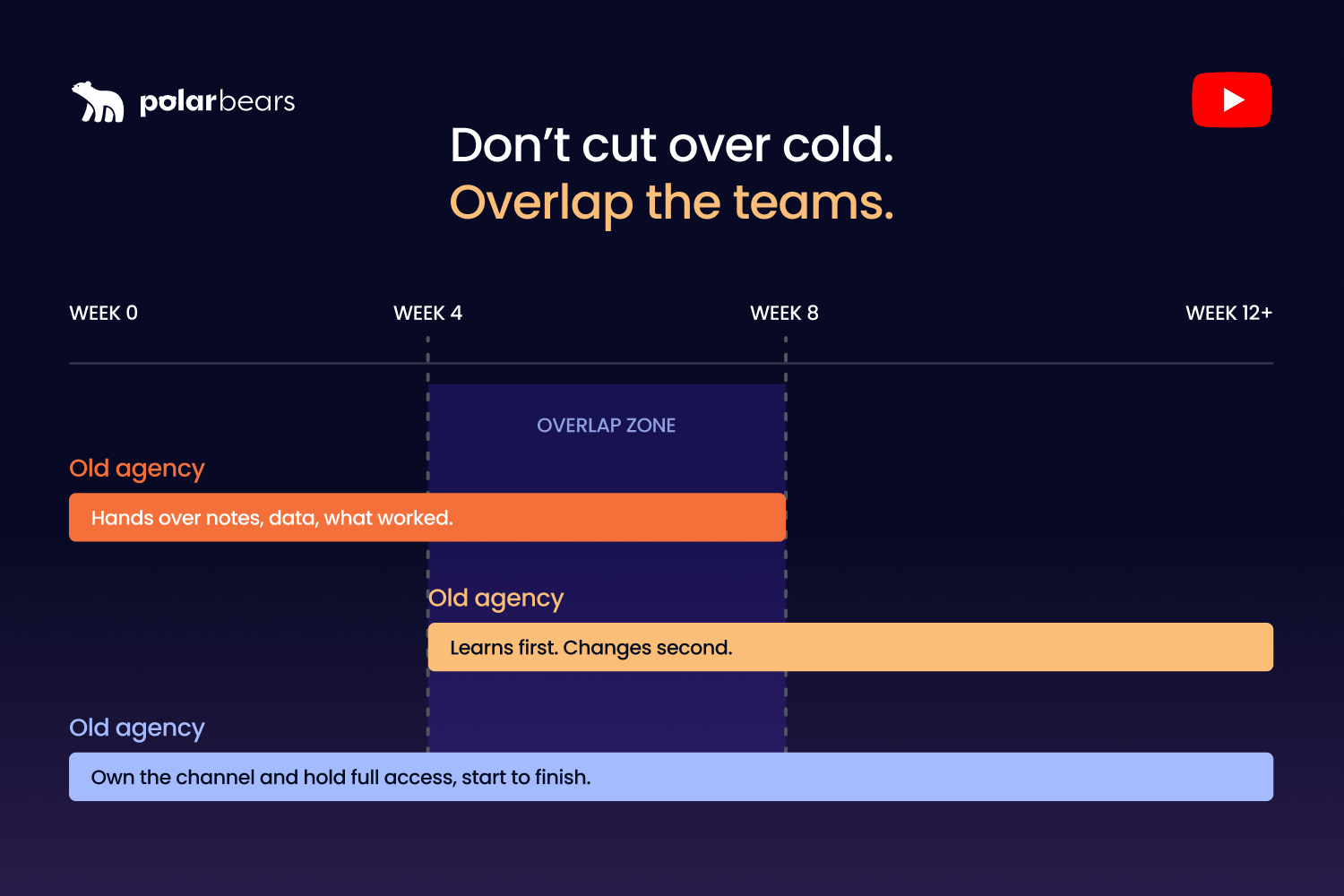
How To Switch YouTube Agencies Without Losing Channel Performance
Changing YouTube agencies feels risky, but your performance lives in the channel, not the agency. Here is how to switch cleanly without losing a thing.
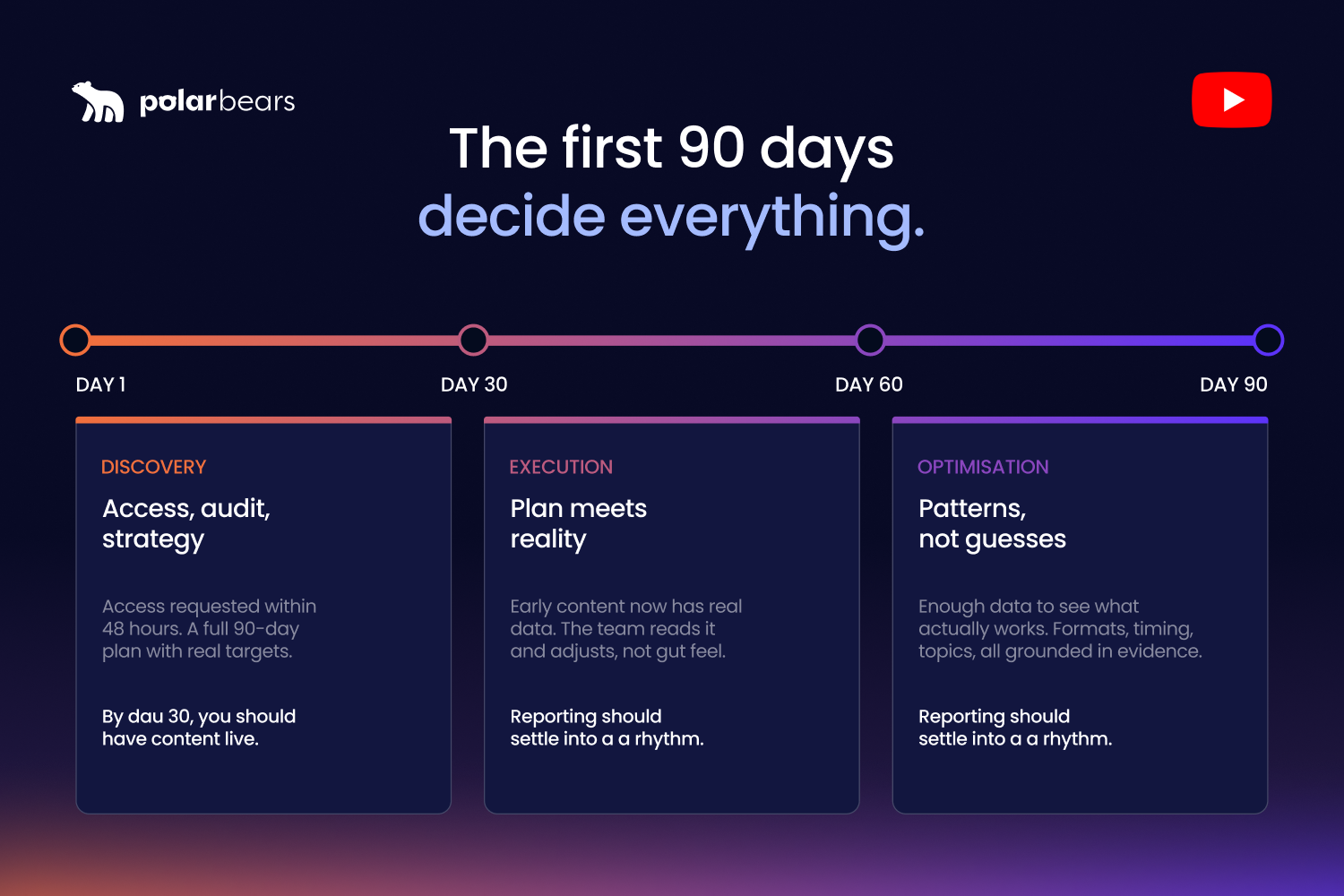
YouTube Agency Onboarding: What the First 90 Days Should Look Like
What a good YouTube agency does in the first 90 days, day by day, so you can tell early whether you hired well or made a mistake.
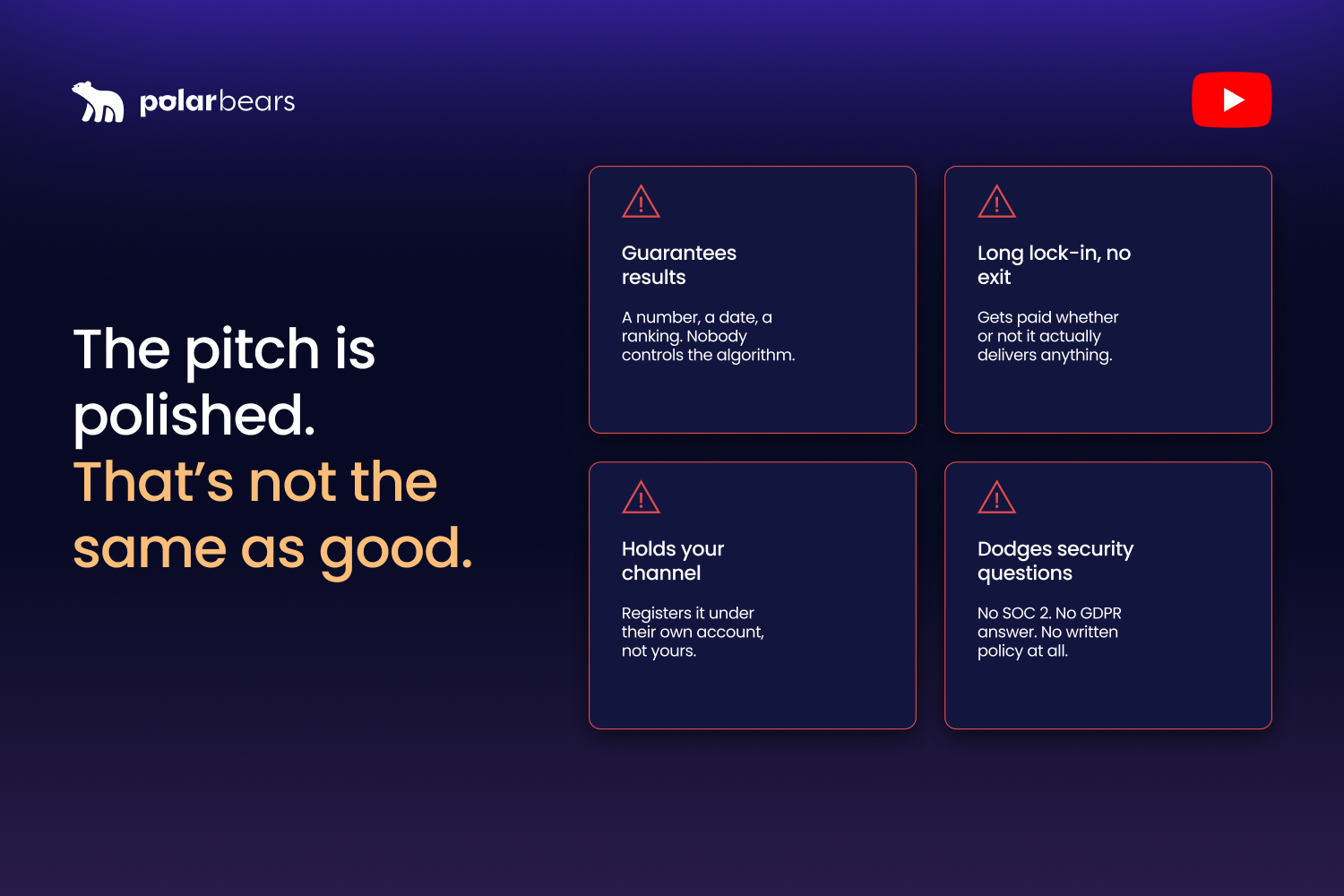
Red Flags When Hiring a YouTube Agency in 2026
The warning signs that separate a real YouTube agency from a money pit: lock-in contracts, guaranteed results, hostage data, and who really owns your channel.

Ready to maximise your YouTube revenue?
Get in touch and let’s begin exploring your channel’s hidden potential.