YouTube for Sports IP Holders: Rights, Highlights and Revenue


YouTube for Sports IP Holders: Rights, Highlights and Revenue
Sports rights holders sit on the most valuable content on YouTube, and a lot of them barely touch it. The footage people most want to watch, will most happily sit through ads for, and most love to clip and share, is exactly what a league or a federation owns. And much of it earns a fraction of what it could, because it is treated as a broadcast asset first and a YouTube asset never.
That is changing fast, and 2026 is the year it became obvious. So this is the brief for rights holders: how Content ID earns from every fan clip of your footage, how highlights and the archive work as channels, what the FIFA deal and the rise of creator partners signal, where the copyright line actually sits, and the mistakes that leave money on the table.
If you want the wider strategy first, our guide to building a YouTube growth engine sets the context. This piece is sports-specific.
Sports owns the most valuable content on YouTube
Start with the asset, because it is unusually strong. Sports content is live, emotional, endlessly clippable, and brand-safe enough that advertisers pay well to sit next to it. That combination is rare. A federation or a league holds footage that fans actively want to find, watch, and re-share, which is the hardest thing to manufacture and the easiest thing to waste.
The problem is rarely the content. It is that rights holders run YouTube as an afterthought to the broadcast deal, posting the occasional highlight and ignoring the platform's worth of fan activity around their footage. The opportunity is to treat YouTube as its own revenue line, with the same seriousness as a broadcast contract.
Content ID: earning from every fan clip of your footage
Here is the mechanic that makes sports on YouTube different. Content ID is YouTube's automatic system for spotting copyrighted material. You give it your footage, it scans every upload on the platform, and when it finds your content in someone else's video, you decide what happens.
Major leagues already do this at scale. The NBA, FIFA and UFC upload their broadcasts into Content ID, so when a fan posts a goal, a knockout, or a buzzer-beater, the rights holder can monetise that video and take the ad revenue, track it, or block it. Monetising is usually the smart call, because every fan clip becomes income instead of a takedown. The whole world of reaction videos, tactical breakdowns, and match clips turns into a revenue stream you did not have to produce. Getting your footage into Content ID and managing the claims well is the foundation, and it is the kind of rights and revenue work that compounds across a season.
Highlights and the archive as channels
Beyond claiming, your own channel is two assets in one. There is the new stuff, highlights and reactions around live fixtures, and there is the archive, decades of classic matches and moments that never stop being watchable.
The archive is the quietly huge one. Classic matches, iconic moments, and themed compilations are perfect for the lean-back, always-on viewing that connected TVs encourage, and they earn from content that was finished years ago. Sports archives are a serious monetisation opportunity precisely because the content is evergreen: a great goal is as watchable in ten years as it is today. Programming that archive properly, rather than dumping it, is where a lot of untapped revenue sits, and our guide to maximising every piece of content applies straight to it.
The 2026 shift: YouTube as a sports platform
This is the kairos, and it is a big one. YouTube has moved from a place fans clip sport to a place sport is officially distributed.
The clearest signal is football's biggest event. FIFA and YouTube signed a preferred-platform agreement for the 2026 World Cup that lets broadcast partners post extended highlights and behind-the-scenes content, live stream the first ten minutes of every match, and stream selected matches in full. That is a governing body treating YouTube as core distribution, not a clip dump.
The other shift is who holds the rights. Sports rights owners are bringing in YouTube creators as official media partners, from Germany's Bundesliga awarding UK live match rights to a YouTube personality, to creators hosting alongside official NFL broadcasts. For a rights holder, the message is that YouTube is now a primary venue for live and near-live sport, and the ones who build there now will own the audience as it moves. Live and near-live fixtures sit naturally with our livestreams work.
Rights, territories, and the copyright line
Sport is the most rights-tangled content there is, so a few realities matter.
Your footage is split by rights windows and territory, meaning who can show what, where, and when, often differs by market and by deal. So a YouTube strategy has to respect the same boundaries as the broadcast contracts behind it, which is why rights holders manage clips and live windows carefully rather than posting everything everywhere. On the fan side, there is a lot of myth about "fair use". Short clips, heavy original commentary, and licensed footage are the safer routes. Content built from 90 per cent original analysis and only short clips has been treated as fair use, while reposting raw match footage is simply infringement. As the rights holder, Content ID puts you on the right side of all of this: you are the one who decides what fan content earns, gets tracked, or comes down.
The mistakes sports rights holders make
The patterns repeat across leagues and federations.
The biggest is leaving Content ID under-worked, so the platform's worth of fan clips earns nothing while the rights holder posts the odd highlight. Another is ignoring the archive, sitting on decades of evergreen content that could run as channels and compilations. A third is treating YouTube as subordinate to the broadcast deal rather than a revenue line with its own strategy, so it never gets the resourcing to perform. And a quieter one is poor clip and rights management across territories, which either leaks revenue or risks breaching the very broadcast contracts that fund the sport.
Running a sports rights operation on YouTube
Live windows, near-live clipping, a deep archive, Content ID claims flowing every matchday, and territorial rights to honour across all of it. That is a real operation, and the revenue hides in the detail: which clips earn, where claims leak, which archive content keeps performing.
At The Polar Bears we manage over two million videos for brands, broadcasters and rights holders, so rights-heavy content at scale is what we do. The reporting behind it is Powered by Vixxi, the platform we license to consolidate YouTube, Google Ads, and Google Ad Manager into one workflow, which for a rights holder means seeing claiming, highlights, and archive revenue together rather than in pieces. For the broadcasters and rights holders we work with, the win is treating the most valuable content on the platform like the asset it is.
FAQ
How do sports rights holders make money on YouTube?
Three main ways. Content ID earns from fan clips of your footage across the platform, your own highlights and live windows earn ad revenue, and your archive of classic content earns from material made years ago. Brand partnerships and sponsorship sit on top. Rights holders who only post occasional highlights capture a small fraction of this.
Can you monetise sports highlights on YouTube?
Yes, if you own or have licensed the footage. As the rights holder you can run ads on your own highlights and, through Content ID, monetise fan videos that use your footage too. The key is that the footage is yours: third parties reposting your broadcast without rights are infringing, which is exactly what Content ID lets you control.
Are sports highlights fair use on YouTube?
Rarely, when it is raw match footage. Reposting broadcast clips is generally infringement, not fair use. Content built from heavy original commentary with only short clips, such as tactical analysis, has been treated as fair use, and very short clips or licensed footage are safer routes. As the rights holder, Content ID means you decide what fan content earns or comes down.
What is the YouTube FIFA World Cup 2026 deal?
FIFA and YouTube signed a preferred-platform agreement for the 2026 World Cup that lets broadcast partners post extended highlights and behind-the-scenes content, live stream the first ten minutes of every match, and stream selected matches in full. It is a major sign of a governing body treating YouTube as core distribution rather than a clip platform.
How do leagues earn from fan clips of their footage?
Through Content ID. Leagues upload their broadcasts into YouTube's matching system, which scans every upload for that footage. When a fan posts a clip, the league can choose to monetise it and take the ad revenue, track it, or block it. Monetising turns the whole world of fan clips into a revenue stream.
Should sports rights holders post full matches or highlights?
Both have a place, within your rights windows. Highlights and short-form content drive reach and clip well, while full or extended content suits live windows and the archive. The 2026 FIFA deal shows full and near-live match content moving onto YouTube, but it must respect the territorial broadcast rights behind it.
Want the most valuable content on YouTube run like the asset it is?
If you liked that why not take a look
YouTube for Music Labels: Content ID, Releases & Sync
For a label, YouTube is three businesses at once: claiming revenue with Content ID, launching releases, and licensing your catalogue through Creator Music.
YouTube for Kids Brands: COPPA, Made for Kids, and How to Actually Monetise
Made for Kids cuts your ad revenue and switches off comments and memberships. Here is how kids brands still build a real business on YouTube in 2026.
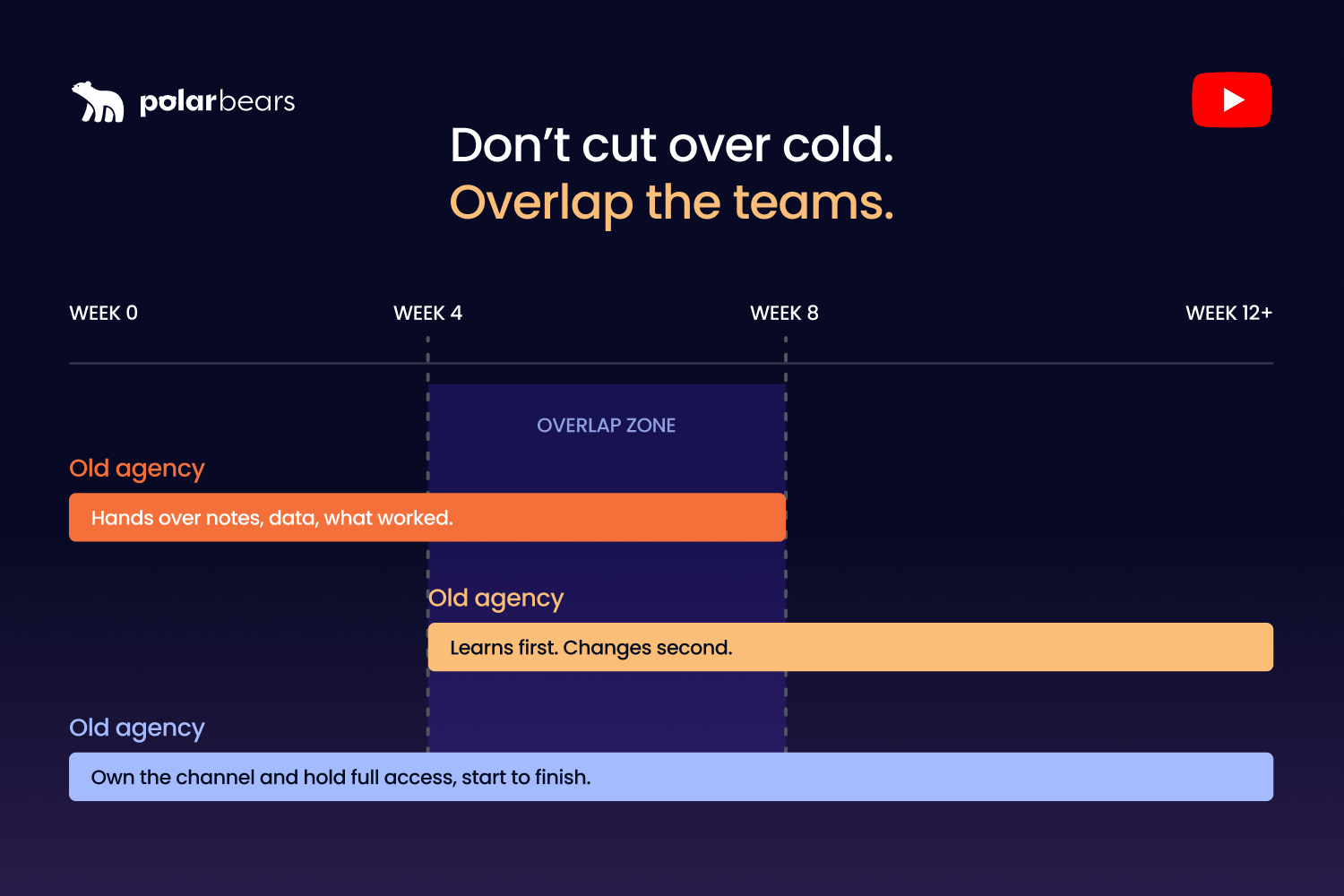
How To Switch YouTube Agencies Without Losing Channel Performance
Changing YouTube agencies feels risky, but your performance lives in the channel, not the agency. Here is how to switch cleanly without losing a thing.
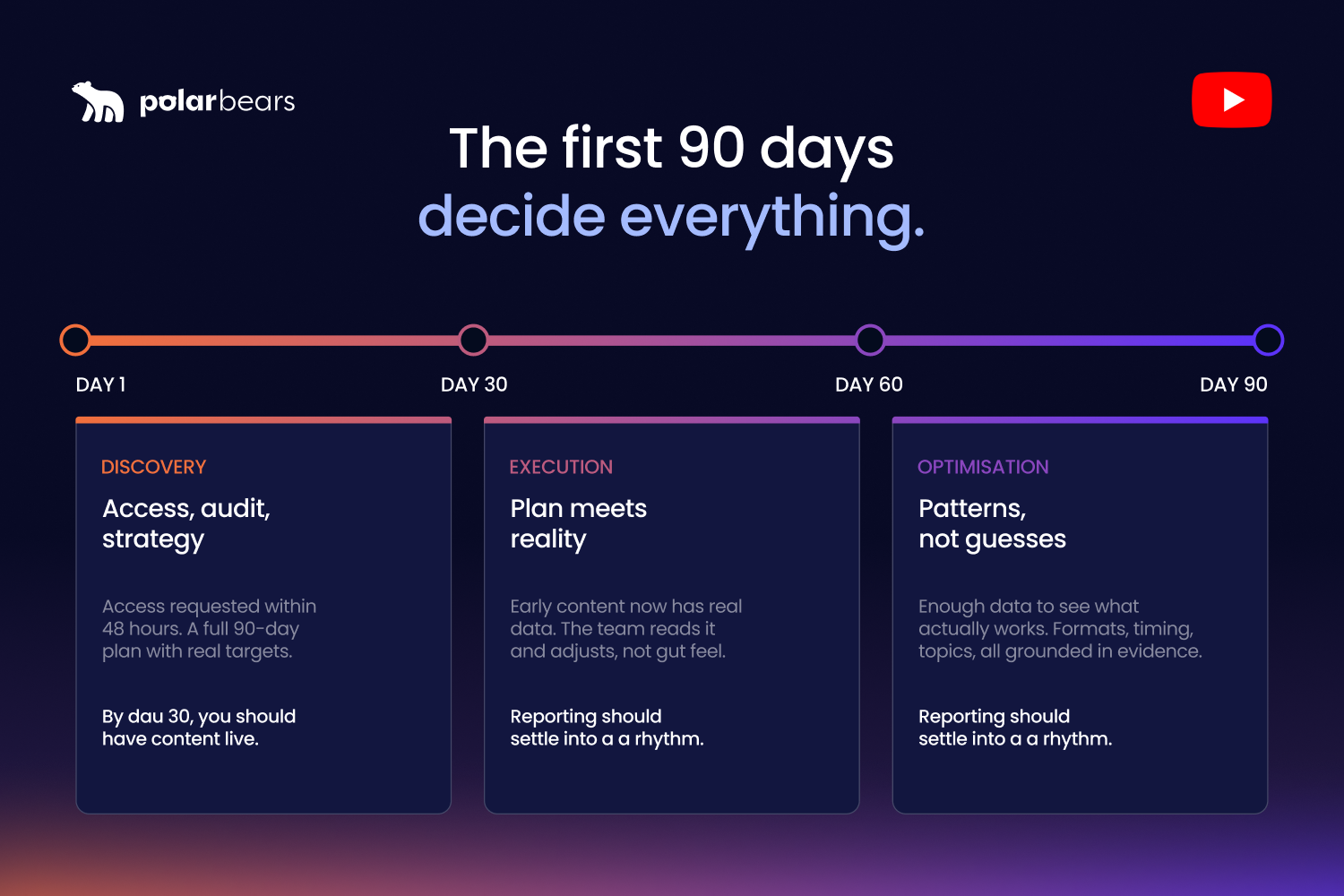
YouTube Agency Onboarding: What the First 90 Days Should Look Like
What a good YouTube agency does in the first 90 days, day by day, so you can tell early whether you hired well or made a mistake.
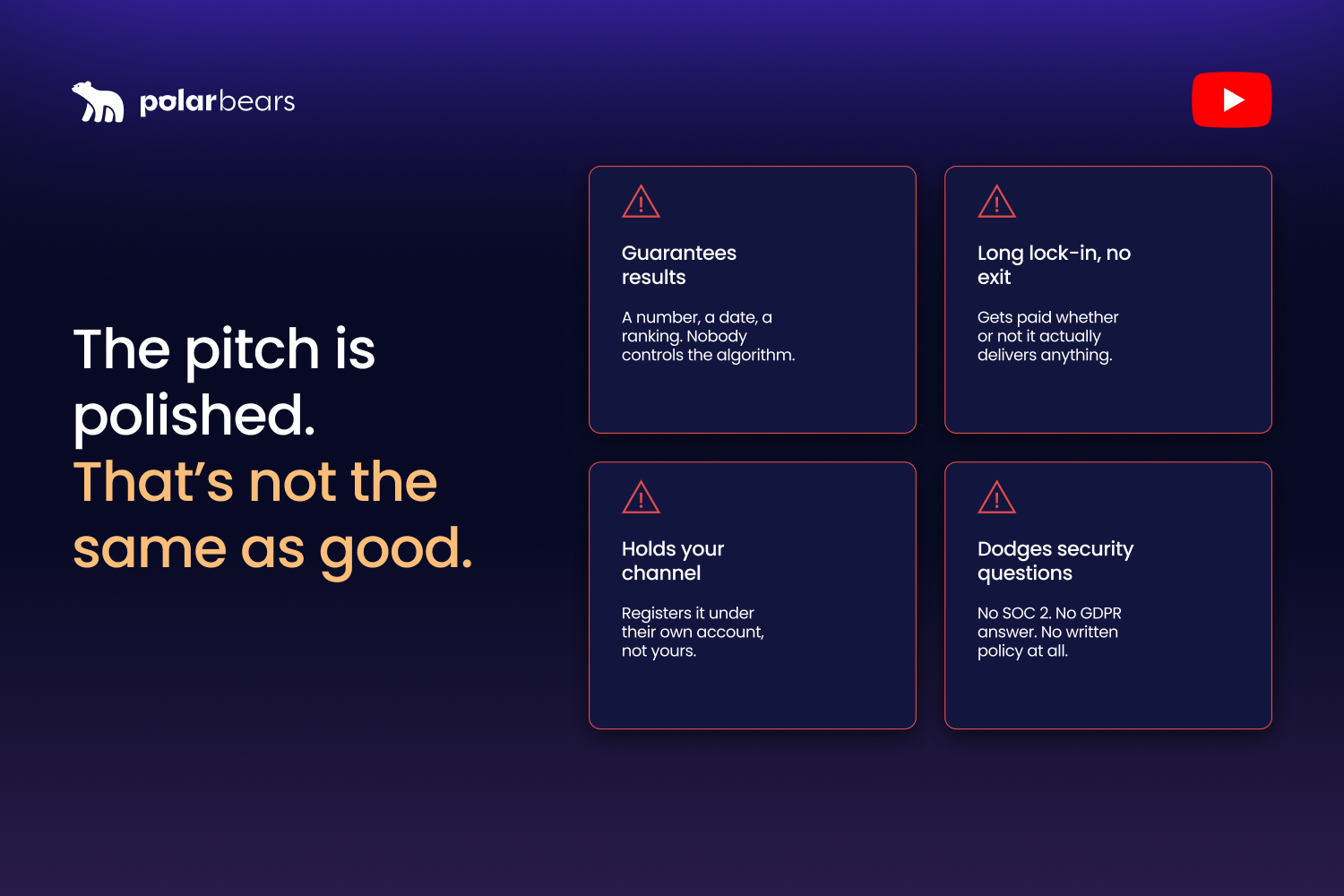
Red Flags When Hiring a YouTube Agency in 2026
The warning signs that separate a real YouTube agency from a money pit: lock-in contracts, guaranteed results, hostage data, and who really owns your channel.
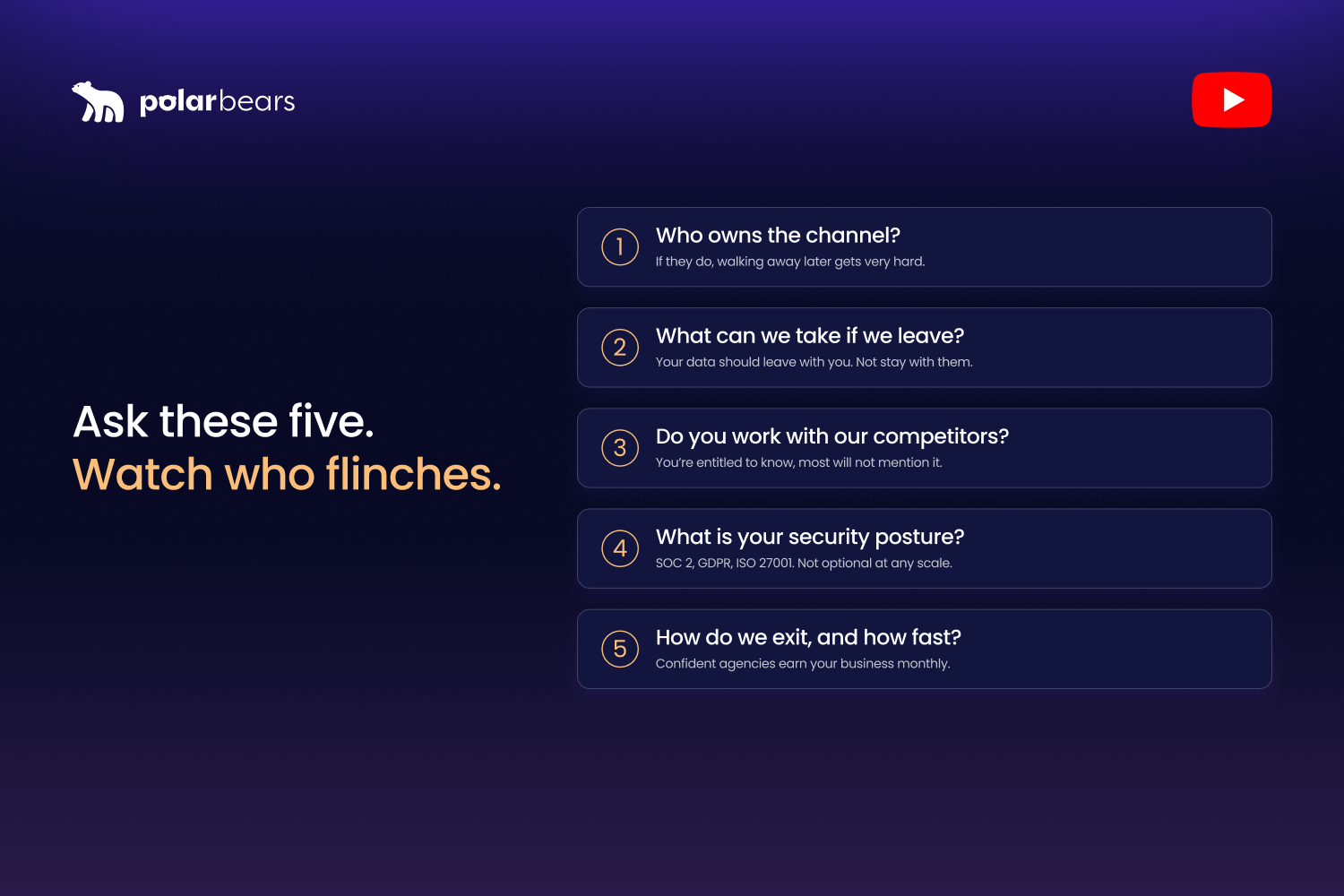
How to Vet a YouTube Agency: The 10 Questions That Actually Matter
The 10 questions that separate a real YouTube agency from a freelancer with a nice website, including the five most agencies hope you never ask.

Ready to maximise your YouTube revenue?
Get in touch and let’s begin exploring your channel’s hidden potential.