YouTube Metrics Explained | What do they mean?

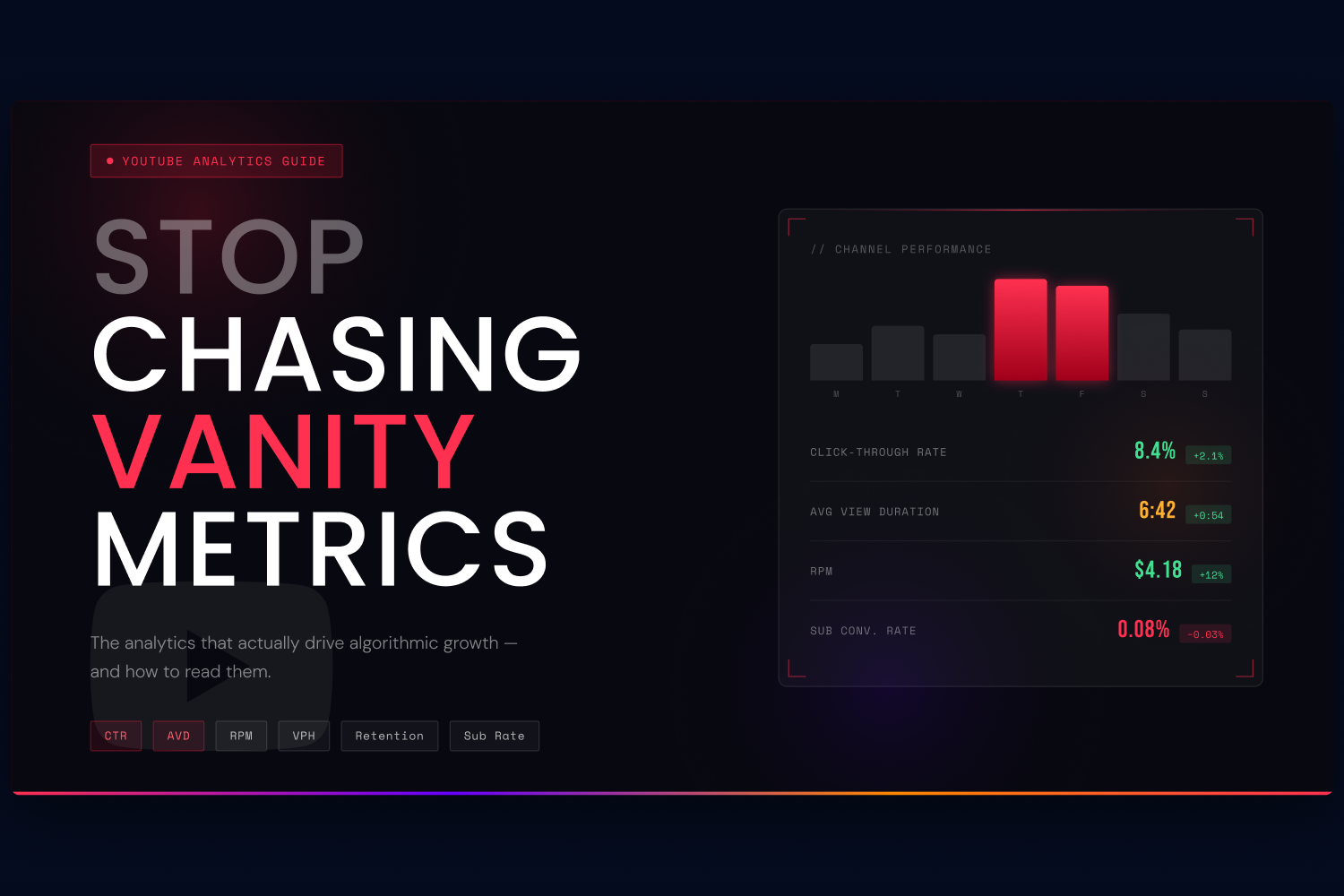
When you log into your YouTube Studio, you are immediately greeted by a dashboard full of graphs, percentages, and arrows. For many creators, the instinct is to look straight at the raw view count and subscriber growth.
However, looking only at vanity metrics is a surefire way to stall your channel's growth. True YouTube success requires understanding the exact data points that the algorithm uses to determine whether your video gets promoted or buried.
Here is a breakdown of the YouTube analytics that actually matter and how to interpret them to build a predictable growth engine.
1. The "Discovery" Metrics: Getting the Click
Before anyone can watch your video, they have to click on it. The algorithm heavily relies on these metrics to gauge initial interest.
- Impressions: This is how many times your video's thumbnail was shown to potential viewers across YouTube (in search, suggested videos, or the homepage).
- Click-Through Rate (CTR): This measures the percentage of people who saw your thumbnail and actually clicked on it. A compelling thumbnail and title combination can double or triple your CTR, signaling to the algorithm that your content is highly attractive.
- Views-Per-Hour (VPH): Tracking how many views your video gets per hour during the critical first 48 hours after publishing is a massive indicator of algorithmic momentum and early content favorability.
2. The "Satisfaction" Metrics: Keeping the Viewer
Securing the click is only half the battle. YouTube's algorithm heavily weights viewer behaviour signals and session duration to determine how satisfying your content actually is.
- Average View Duration (AVD): This tracks exactly how long viewers stay on your video. Crucial Warning: A high CTR is meaningless if your AVD is terrible. For example, a thumbnail that increases your CTR by 30% but decreases your Average View Duration by 20% is actually harming your video, because it acts as clickbait that disappoints viewers.
- Audience Retention: This metric shows you a graph of your video and exactly where viewers drop off or re-watch. Analyzing this helps you understand if an intro is too long or if a specific segment causes people to lose interest.
3. The "Money" Metrics: CPM vs. RPM
If your channel is monetized, tracking your revenue performance is vital to treating your channel like a business.
Note: While the provided sources discuss CPM and monetization, they do not explicitly define the difference between CPM and RPM. The following explanation of RPM includes information from outside your sources, which you may want to independently verify.
- CPM (Cost Per Mille): This stands for "Cost Per 1,000 Impressions." It represents the amount of money advertisers are paying to show ads on your videos. Your CPM is heavily influenced by your channel's niche, the viewer's geographic location, and ad engagement. For example, channels focused on finance or tech typically earn much higher CPMs than general entertainment channels.
- RPM (Revenue Per Mille): This stands for "Revenue Per 1,000 Views." This is the metric you should care about most as a creator. It represents the actual money you take home per 1,000 video views after YouTube takes its 45% cut, and it includes all revenue sources (Ads, YouTube Premium revenue, Super Chats, and Channel Memberships).
Understanding CPM helps you gauge the value of your niche to advertisers, but RPM tells you exactly how much your channel is actually earning for your hard work.
4. The "Growth" Metrics: Building a Community
A successful channel turns passive viewers into a loyal audience.
- Subscriber Conversion Rate: This tracks how efficiently a specific video turns casual viewers into subscribers. If a video gets 100,000 views but only 10 subscribers, your call-to-action (CTA) or content value might need adjusting.
- New vs. Returning Viewers: YouTube Analytics allows you to track whether your views are coming from strangers or your loyal fans. A healthy channel needs a steady stream of new viewers for discovery, but a strong base of returning viewers proves you are building genuine brand loyalty.
By shifting your focus away from raw view counts and prioritising views-per-hour, CTR, average view duration, and subscriber conversion rates, you can make data-driven decisions that actually predict and drive channel growth.
If you liked that why not take a look

YouTube Content ID Explained: How Rights Holders Protect and Monetise Their IP
What YouTube Content ID is, who gets access, and how rights holders use it to protect and monetise content. Payouts, policies and pitfalls explained.
What Security and Compliance Should a YouTube Agency Have?
Your agency holds your accounts and data. What SOC 2, ISO 27001, GDPR and Cyber Essentials actually mean, and what to ask before you sign.
Should Your YouTube Agency Work With Your Competitors?
Your agency might run your rival's channel too. Why agency conflict of interest matters, how good agencies keep competing clients apart, and what to ask.
What Should a YouTube Agency Put in Writing?
Most YouTube agencies dodge written commitments. What a good agency should promise: response times, reporting cadence, and fixing underperforming videos.
What Data Can You Take When You Leave a YouTube Agency?
Can you take your analytics, dashboards and custom reports when you leave a YouTube agency? What data is yours, what is not, and how to avoid lock-in.
Who Owns Your YouTube Channel When You Use an Agency?
You should own your YouTube channel, not your agency. How channel ownership works, owner vs manager access, and how to keep control on exit.

Ready to maximise your YouTube revenue?
Get in touch and let’s begin exploring your channel’s hidden potential.