YouTube for Music Labels: Content ID, Releases & Sync


YouTube for Music Labels: Content ID, Releases and Sync
Most platforms give a label one job: put the music up and hope it gets played. YouTube gives a label three businesses at once, and the labels that win treat them as three, not one.
The first is claiming. Every fan edit, dance video, and vlog that uses your music can earn you money, automatically, through Content ID. The second is releasing, using the channel as a launchpad for drops with premieres and a proper artist presence. The third is licensing, renting your catalogue to other creators at scale through Creator Music. Run all three and YouTube stops being a place you upload videos and becomes a revenue engine.
This guide walks through each one, what changed in 2025 and 2026, and the mistakes labels keep making. For the wider picture of using YouTube as a business, our guide to building a growth engine for brands sets the frame.
YouTube is three businesses for a label
It helps to name them up front, because most labels only run one and leave the other two on the table.
Claiming is passive income from the whole platform, not just your own channel. Releasing is the active, promotional side, your artists and their drops. Licensing turns your catalogue into a product other creators pay to use. Each needs a different setup, and the value is in running them together rather than picking one.
Content ID: earning from every video that uses your music
This is the big one, and it is unique to YouTube. Content ID is YouTube's automatic system for spotting copyrighted material. You give it your catalogue, it scans every upload on the platform against that database, and when it finds your music in someone else's video, you choose what happens.
You can monetise the video, which means YouTube runs ads on it and the revenue comes to you. You can track it, just watching where and how your music is being used. Or you can block it. For a label, the monetise option is the quiet money-maker, because it earns from the entire platform's worth of fan content, not only from your own uploads. Every trend that uses one of your tracks becomes revenue you did not have to make. Getting your catalogue into Content ID cleanly, and managing the claims and disputes that follow, is the foundation everything else sits on, and it is the kind of rights and revenue work that pays for itself many times over at catalogue scale.
The Official Artist Channel
For the releasing side, the Official Artist Channel matters. An Official Artist Channel, or OAC, is YouTube's verified home for an artist that pulls their official videos, topic content, and uploads into one place with a music note badge, instead of the audience scattering across unofficial uploads. It consolidates the artist's presence and the watch-time that comes with it.
The rules here are tightening. Enforcement around Shorts for Official Artist Channels and label-linked content stepped up from December 2025, so labels need to keep their OAC setup current rather than treating it as a one-time switch. Set up well, the OAC is where an artist's audience compounds. Left unmanaged, the audience leaks to fan uploads you do not control.
Releases: premieres and the first-day spike
A release on YouTube is an event, and labels that treat it like a quiet upload waste the moment. A Premiere gives a finished video a scheduled debut with a countdown and live chat, then turns into a normal video afterwards. For a drop, that concentrates fans into one window, which is exactly what you want on release day.
The first hours of a release matter, because early engagement helps a video reach further. So a label's release plan should treat the premiere as the centrepiece, with the OAC, the topic content, and the catalogue all primed to catch the audience the drop brings in. This is where the releasing business and the claiming business meet: the release pulls attention, and Content ID earns from all the fan content that attention creates.
Creator Music and sync: licensing your catalogue at scale
The third business is the newest, and it is growing fast. Creator Music is a marketplace inside YouTube Studio where creators license songs from labels to use in their own videos. Each licence covers one video and clears the Content ID claim on that song for that upload, so the creator can use your track without a claim, and you get paid for it. Through 2025 it expanded to include major-label catalogues alongside independents.
This is sync licensing, scaled down and automated. A sync licence, short for synchronisation, is permission to use a recording in time with visual content, the way a song is licensed into an advert or a film. Traditionally that is a slow, deal-by-deal business. Creator Music turns the same idea into a self-serve marketplace, so thousands of creators can license your catalogue without a single negotiation. Worth knowing: a song carries two rights, the master, which is the recording the label owns, and the composition, which is the song itself owned by the publisher, and both have to be cleared for a licence to be clean. Pricing scales with channel size, and revenue-share terms apply to short uses inside longer videos. For a label, it is found money from a catalogue that was sitting there anyway.
The mistakes labels make on YouTube
Even big labels leave value on the table, usually in the same few ways.
The most common is running only one of the three businesses, uploading official videos but never properly working Content ID, so the platform's worth of fan content earns nothing. Another is letting an artist's audience scatter across unofficial uploads instead of consolidating it on a well-run Official Artist Channel. A third is treating releases as uploads rather than events, and missing the first-day spike that helps a video travel. And a quieter one is poor catalogue data, messy metadata and rights information that makes claiming and licensing leak revenue, the unglamorous groundwork that decides how much of the money you actually collect.
Running a label's YouTube properly
Three businesses, a huge catalogue, claims and disputes flowing constantly, releases that have to land on the day, and a licensing marketplace to feed. That is an operation, and the revenue hides in the detail, in which tracks are earning, where the claims are leaking, and which artists are compounding.
At The Polar Bears we manage over two million videos and work with major music rights holders, so this three-sided model is familiar ground. The reporting behind it is Powered by Vixxi, the platform we license to consolidate YouTube, Google Ads, and Google Ad Manager into one workflow, which for a label means seeing claiming, releases, and licensing revenue in one place instead of three. For the rights holders and publishers we work with, the gain is treating YouTube as the multi-stream business it actually is, not a video upload.
FAQ
How do music labels make money on YouTube?
Three ways at once. Content ID earns from fan videos across the whole platform that use your music. Your own releases and Official Artist Channels earn ad and engagement revenue. And Creator Music licenses your catalogue to other creators for a fee. Labels that run all three earn far more than those treating YouTube as a place to upload official videos.
What is YouTube Content ID for music?
Content ID is YouTube's automatic system that scans every upload against your catalogue and flags where your music is used. When it finds a match, you choose to monetise the video and take the ad revenue, just track it, or block it. For a label, monetising is the quiet earner, because it collects from the entire platform's fan content.
What is a YouTube Official Artist Channel?
An Official Artist Channel, or OAC, is YouTube's verified home for an artist, marked with a music note badge, that pulls their official videos and topic content into one place. It consolidates the artist's audience and watch-time instead of letting it scatter across unofficial uploads, and its rules, including around Shorts, have been tightening through 2025 and 2026.
What is YouTube Creator Music?
Creator Music is a marketplace inside YouTube Studio where creators license label songs to use in their own videos. Each licence covers one video and clears the Content ID claim for that upload, so the creator uses your track without a claim and you get paid. It expanded to include major labels through 2025.
How do labels license their music to creators on YouTube?
Mostly through Creator Music, which turns sync licensing into a self-serve marketplace. A sync licence is permission to use a recording in time with visual content. Instead of negotiating each deal, a label lists its catalogue and thousands of creators license tracks automatically, with pricing scaled to channel size and revenue-share on short uses.
Should labels use Premieres for new releases?
Yes. A Premiere gives a release a scheduled debut with a countdown and live chat, concentrating fans into one window on drop day. Because early engagement helps a video travel, treating a release as a premiere event rather than a quiet upload captures the first-day spike and the fan content it generates.
Want your label's YouTube run as the three businesses it actually is?
If you liked that why not take a look
YouTube for Kids Brands: COPPA, Made for Kids, and How to Actually Monetise
Made for Kids cuts your ad revenue and switches off comments and memberships. Here is how kids brands still build a real business on YouTube in 2026.
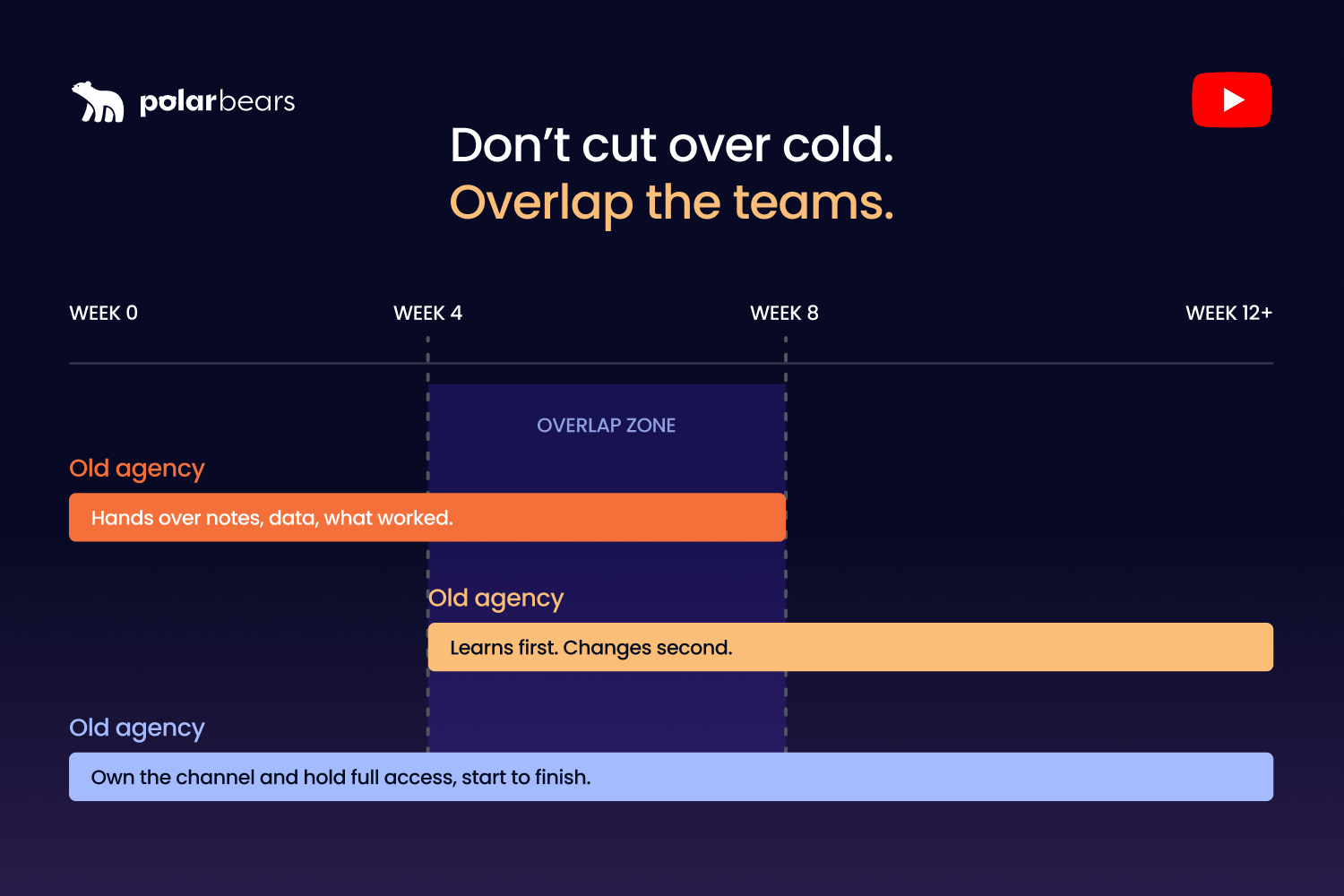
How To Switch YouTube Agencies Without Losing Channel Performance
Changing YouTube agencies feels risky, but your performance lives in the channel, not the agency. Here is how to switch cleanly without losing a thing.
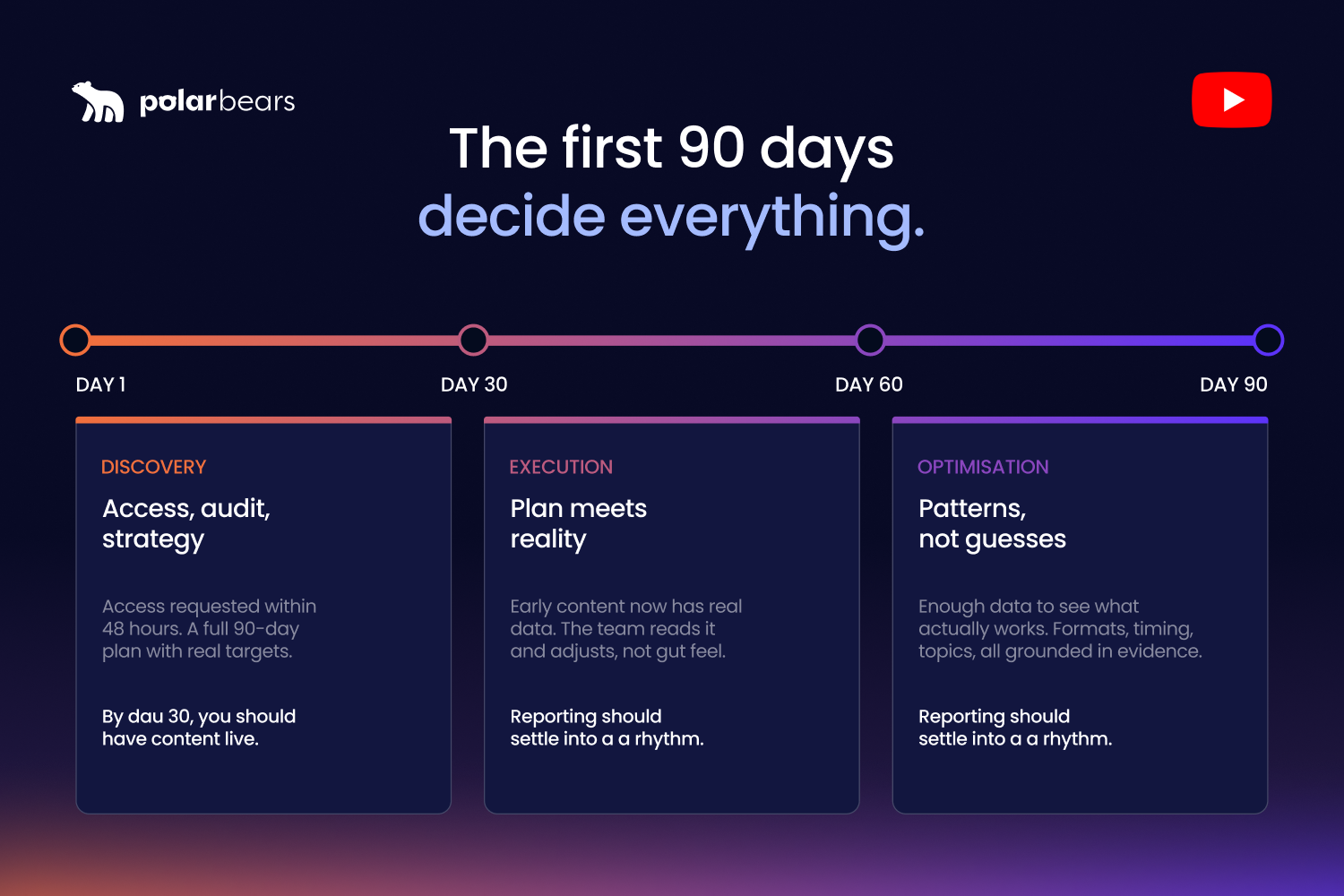
YouTube Agency Onboarding: What the First 90 Days Should Look Like
What a good YouTube agency does in the first 90 days, day by day, so you can tell early whether you hired well or made a mistake.
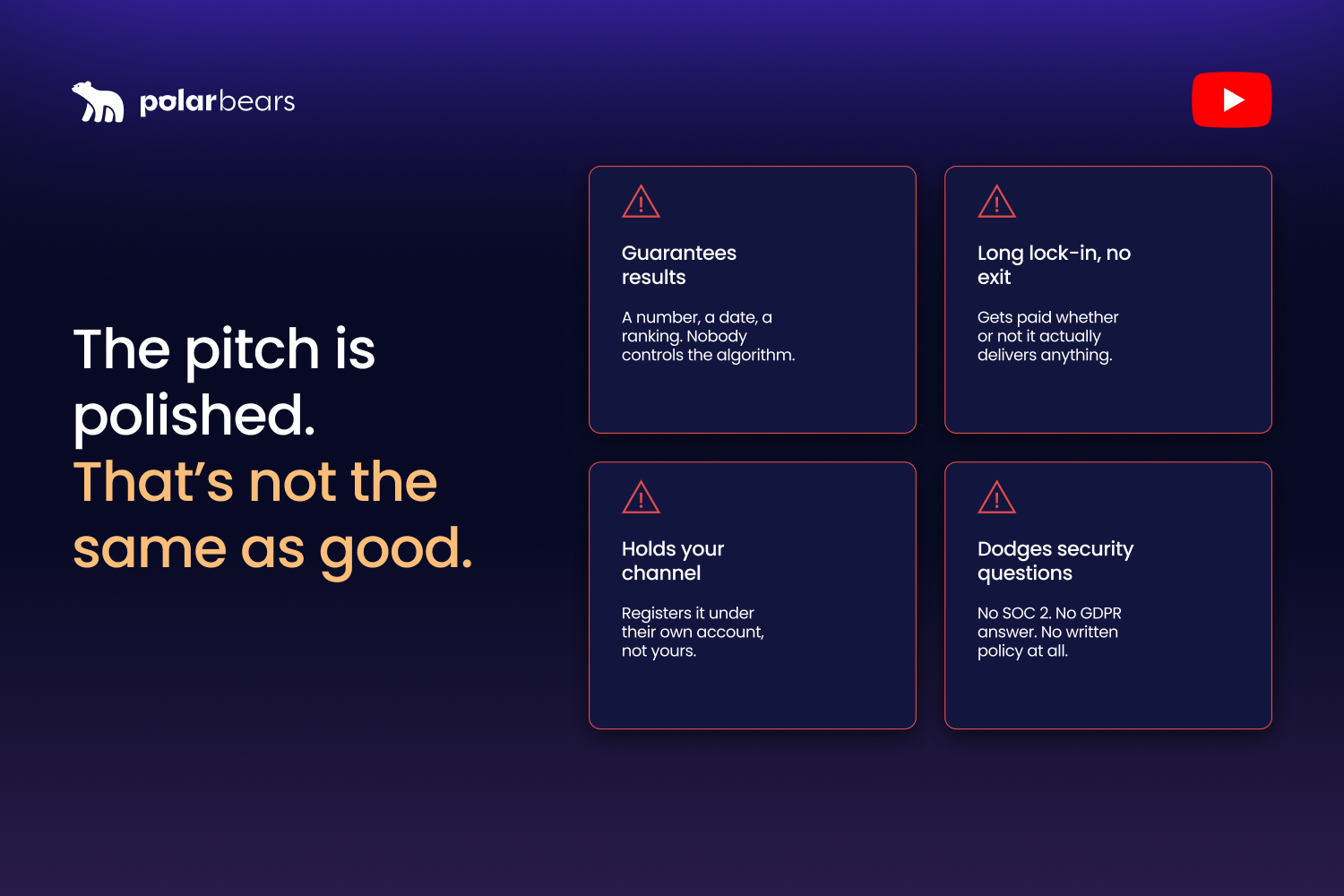
Red Flags When Hiring a YouTube Agency in 2026
The warning signs that separate a real YouTube agency from a money pit: lock-in contracts, guaranteed results, hostage data, and who really owns your channel.
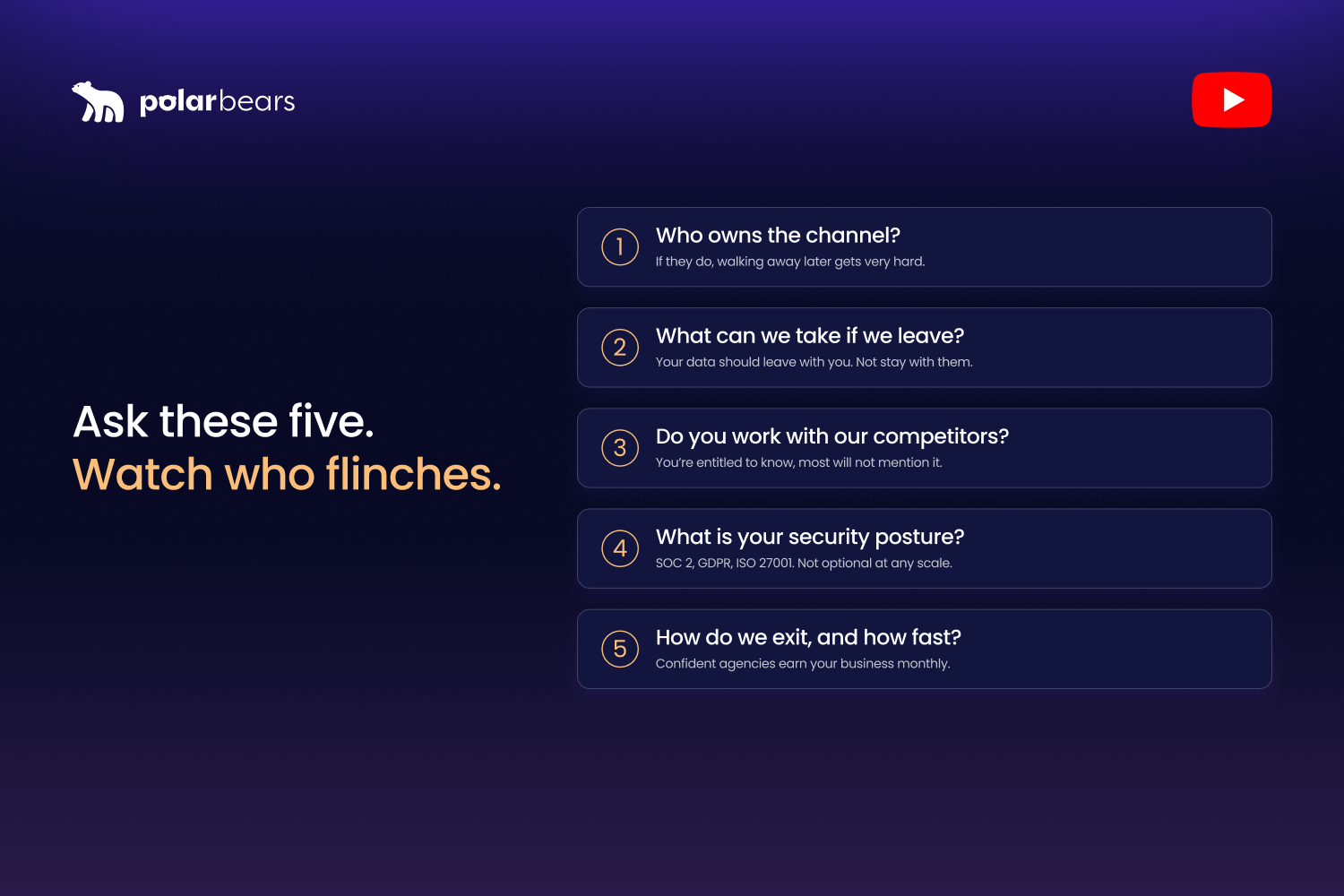
How to Vet a YouTube Agency: The 10 Questions That Actually Matter
The 10 questions that separate a real YouTube agency from a freelancer with a nice website, including the five most agencies hope you never ask.
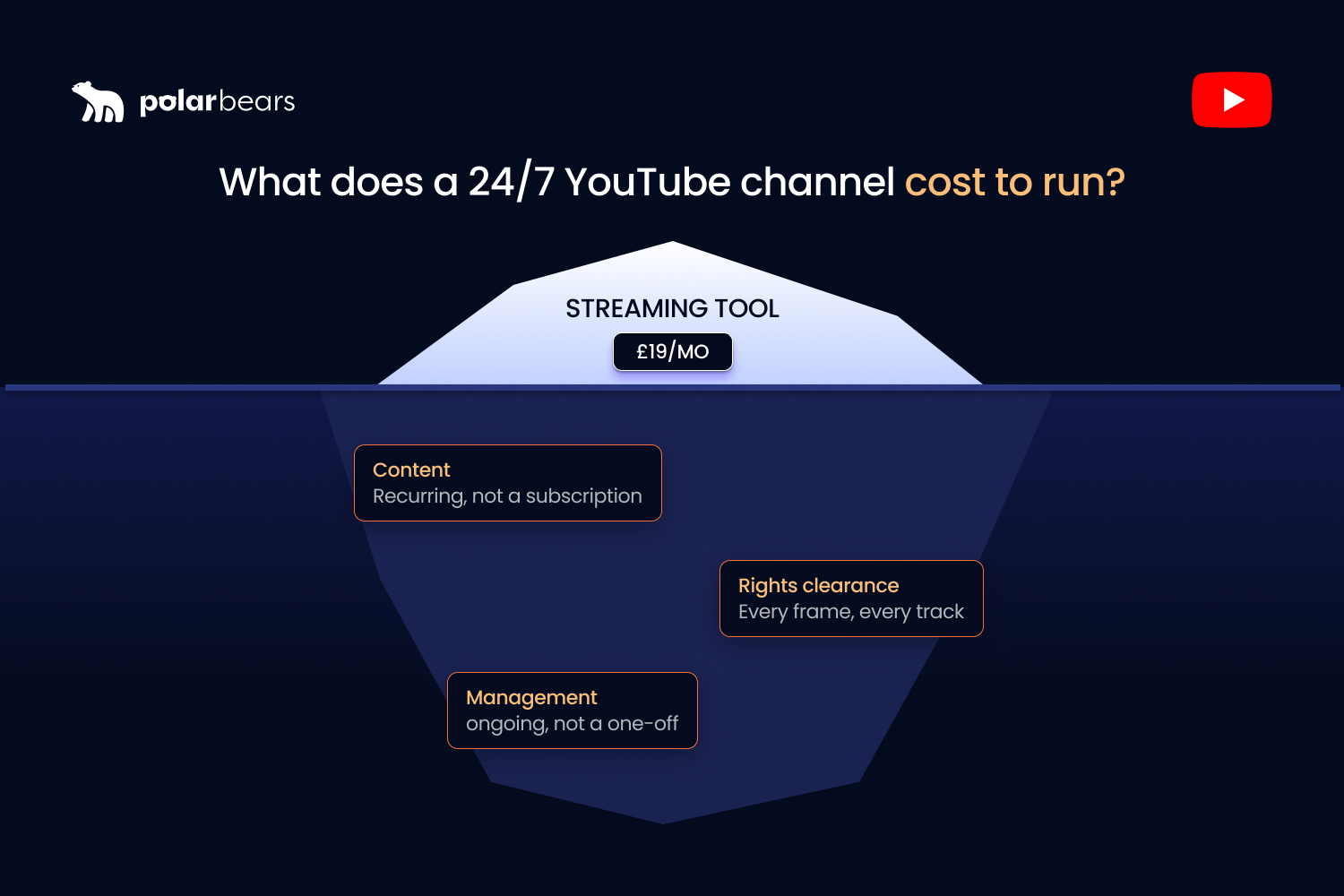
What It Actually Costs to Run a 24/7 Channel vs Standard Uploads
The real cost of an always-on YouTube channel vs standard uploads. Streaming is cheap. Content, rights and management are where the money goes.

Ready to maximise your YouTube revenue?
Get in touch and let’s begin exploring your channel’s hidden potential.