YouTube for Kids Brands: COPPA, Made for Kids, and How to Actually Monetise


YouTube for Kids Brands: COPPA, Made for Kids, and How to Actually Monetise
A kids brand can build a huge, loyal audience on YouTube and still be blindsided by the revenue. You hit millions of views, open the earnings report, and the number is a fraction of what a general-audience channel that size would earn. Nobody did anything wrong. You just ran into Made for Kids, and it changes the entire business model.
So this is the honest brief for kids brands. What Made for Kids actually is, what it switches off, the real size of the revenue hit, what the 2025 and 2026 rule changes mean, and how kids brands still build a proper business on YouTube despite all of it. The rules exist to protect children, which is a good thing. The job is to build a strong channel inside them.
If you want the wider playbook first, our guide to building a YouTube growth engine for brands sets the scene. This piece is the kids-specific version.
The rule that changes everything: Made for Kids
Made for Kids is a setting you apply to your channel or individual videos to say the content is aimed at children. It exists because of COPPA, the US Children's Online Privacy Protection Act, a law that limits how online services collect and use data from children under 13. YouTube is a US company, so the rule applies to kids content worldwide, and the UK and EU have their own children's privacy rules on top.
The part that catches brands out is who decides. You do. The content owner is legally responsible for designating content correctly, and YouTube tells creators not to rely on its systems to set the audience, because its automated detection may miss things the regulator would call made for kids. Get it wrong and the consequences are not just on YouTube. They can be legal, under COPPA or local law. So this is a compliance decision first and a revenue decision second.
What you lose when content is Made for Kids
Marking content as Made for Kids does not just change the ads. It strips out a long list of features, because nearly all of them rely on collecting data or on a comments section that is not appropriate for children.
When a video is Made for Kids you lose personalised ads, comments, the notification bell, end screens and cards, channel memberships, and the Super Chat, Super Stickers, and Super Thanks tipping features. In plain terms, the tools other channels use to drive engagement and stack up extra revenue are simply switched off. The audience is real, but the toolbox is smaller.
The revenue hit, in real numbers
Here is the part that reshapes the business model, and it is worth being precise about.
The big one is ads. A normal channel runs personalised ads, which are targeted using a viewer's data and pay well. Kids content cannot run those, so it runs contextual ads instead, which are matched to the video's topic rather than the viewer, and pay far less. The gap is large. Made for Kids content typically earns roughly $1 to $3 per thousand views, against $5 to $15 for general-audience content, a measure known as RPM, or revenue per thousand views. Industry estimates put kids RPM at 50 to 80 per cent lower than comparable adult-audience channels.
That single fact is why a kids channel cannot be run like a general one. The same view is worth a fraction as much, the tipping and membership features are gone, and the maths only works at scale or with revenue coming from somewhere other than ads. Our breakdown of the metrics that actually matter is doubly important here, because chasing raw views without watching RPM and watch-time will flatter a kids channel that is quietly under-earning.
What 2025 and 2026 changed
The ground has moved recently, and kids brands need to keep up.
In January 2025 the US regulator, the FTC, finalised the first major update to the COPPA rule since 2013. It tightened the screws: separate parental opt-in before any targeted advertising, formal data-security obligations, and limits on how long children's data can be kept. Then from August 2025, YouTube began rolling out AI age estimation, which tries to work out whether a viewer is under 18 from their behaviour rather than the birthday they once typed in. The direction is clear. Identifying young audiences is getting stricter and more automatic, not looser.
For a kids brand, the takeaway is simple. Treat accurate Made for Kids designation as non-negotiable, build on the assumption that enforcement tightens, and do not design a business that only works if you bend the audience setting. That is a short-term gain and a long-term liability.
How kids brands still win
None of this means kids YouTube is a dead end. Some of the biggest channels on the platform are kids brands. They just earn differently, and the strategy follows the rules instead of fighting them.
Scale and watch-time
Because each view earns less, volume and retention matter more. Long, bingeable content and deep, well-organised libraries do the heavy lifting, which is exactly the always-on, lean-back model that suits children's viewing. Our guide to maximising every piece of content applies directly.
Licensing and IP
For brands that own characters and shows, YouTube is a shop window as much as a revenue line. The audience it builds feeds toys, licensing, streaming deals, and live events, where the real money for kids IP often sits. The channel's job is reach and affection for the brand, not just the ad cheque.
Brand partnerships done properly
Kids content can carry sponsorship and brand deals, handled carefully and within advertising rules for children. This is revenue that does not depend on personalised ads at all, and for established kids brands it is often larger than the ad income. It is the kind of work our commercial partnerships team handles for rights holders.
The mistakes that get kids brands in trouble
A few errors come up again and again, and all of them are avoidable.
The worst is mis-designating content to chase the higher ad rate, marking clearly child-directed content as not for kids. That is the one with real legal risk, and it is not worth it. Another is expecting comments and community features to work as a growth engine, then being surprised when they are switched off. A third is judging the channel on view count alone and missing that the RPM is quietly halving the value of every one of those views. And the most common of all is relying on YouTube's automatic detection instead of owning the designation decision, which leaves you exposed if the regulator disagrees.
Building a kids YouTube operation properly
Run at this scale, a kids channel is a real operation. Huge libraries, ad revenue that needs watching closely because it is lower per view, brand deals running alongside, and a compliance line you cannot afford to cross. That is a lot to hold together.
At The Polar Bears we manage over two million videos, and we work with major kids and family brands, so this model is home turf. The reporting behind it is Powered by Vixxi, the platform we license to consolidate YouTube, Google Ads, and Google Ad Manager into one workflow, which matters more for kids content than most, because when every view earns less, you have to see exactly where the revenue is coming from to run it as a business. For the kids brands, broadcasters and publishers we work with, the win is treating the lower ad rate as a known constraint and building the rest of the business around it.
FAQ
What does Made for Kids mean on YouTube?
It is a setting that marks a channel or video as aimed at children, required under the US COPPA law that limits data collection from under-13s. Once applied, the content runs only contextual ads and loses comments, the notification bell, end screens, cards, memberships, and tipping features, because those rely on data or interaction not allowed on children's content.
How much less do kids channels earn on YouTube?
A lot less per view. Made for Kids content typically earns around $1 to $3 per thousand views, against $5 to $15 for general-audience content, because it can only run lower-paying contextual ads. Industry estimates put kids RPM roughly 50 to 80 per cent below comparable adult channels.
Can you monetise a Made for Kids channel?
Yes. You can still join the YouTube Partner Program and earn from contextual ads, and the channel can carry brand deals and feed licensing, toys, and streaming revenue. What you cannot use is personalised ads, memberships, or tipping, so the business model leans on scale, watch-time, and revenue beyond ads.
Why are comments turned off on kids videos?
To protect children. Comments, the notification bell, and other interactive features are disabled on Made for Kids content because they involve data collection or contact that is not appropriate for a child audience under COPPA. It is a safety rule, not a glitch, and it cannot be switched back on for that content.
What is COPPA and how does it affect YouTube?
COPPA is the US Children's Online Privacy Protection Act, which limits how online services collect and use data from children under 13. Because YouTube is a US platform, it shapes how all kids content is treated worldwide: child-directed videos must run without personalised ads or data-driven features, and owners must designate that content accurately.
Who decides if YouTube content is made for kids?
You do, as the content owner, and it is a legal responsibility. YouTube has automatic detection, but it tells creators not to rely on it, because its systems may miss content a regulator would consider child-directed. Designate accurately, because getting it wrong carries consequences on YouTube and potentially under COPPA.
Want a kids YouTube channel built to earn within the rules, not despite them?
If you liked that why not take a look
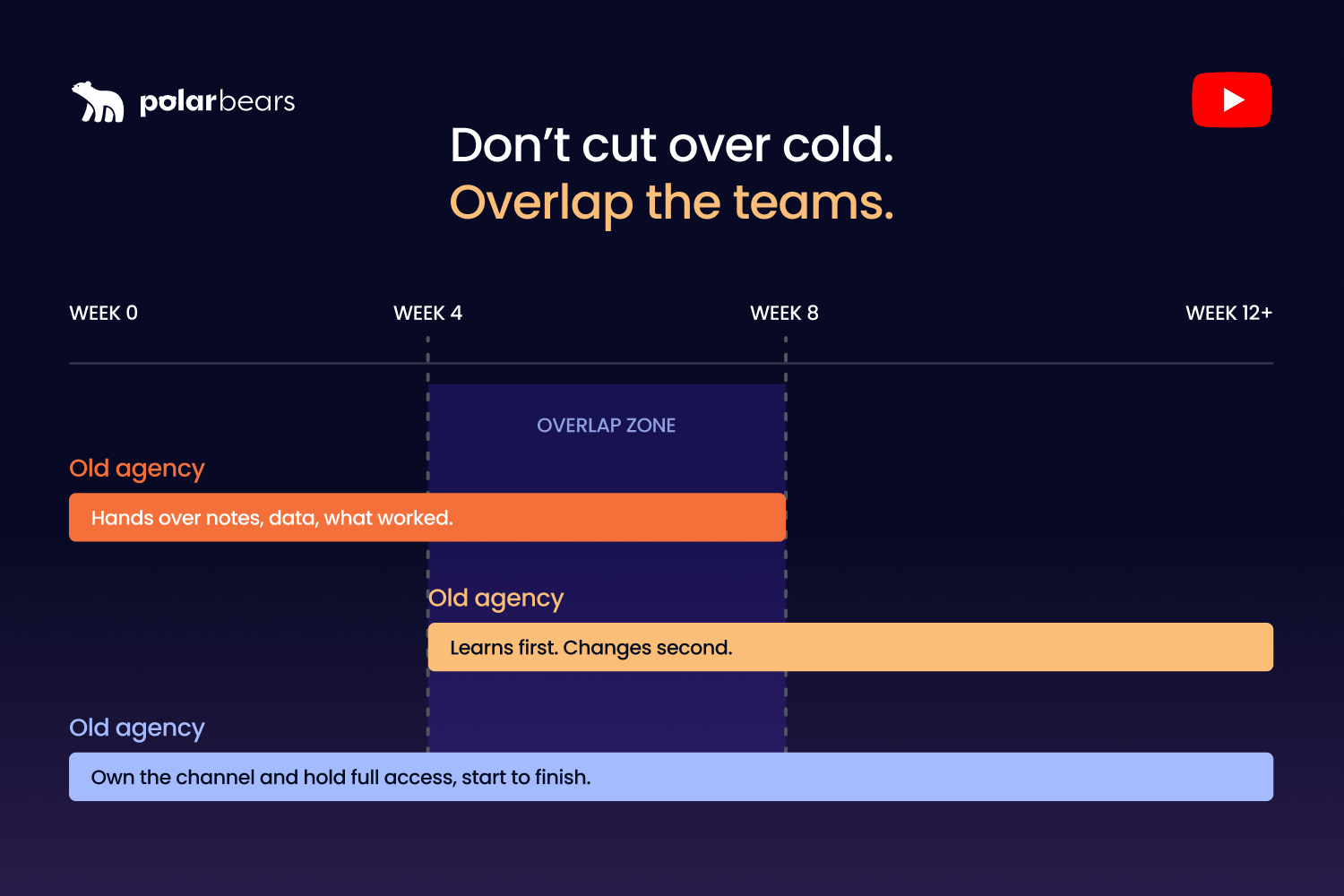
How To Switch YouTube Agencies Without Losing Channel Performance
Changing YouTube agencies feels risky, but your performance lives in the channel, not the agency. Here is how to switch cleanly without losing a thing.
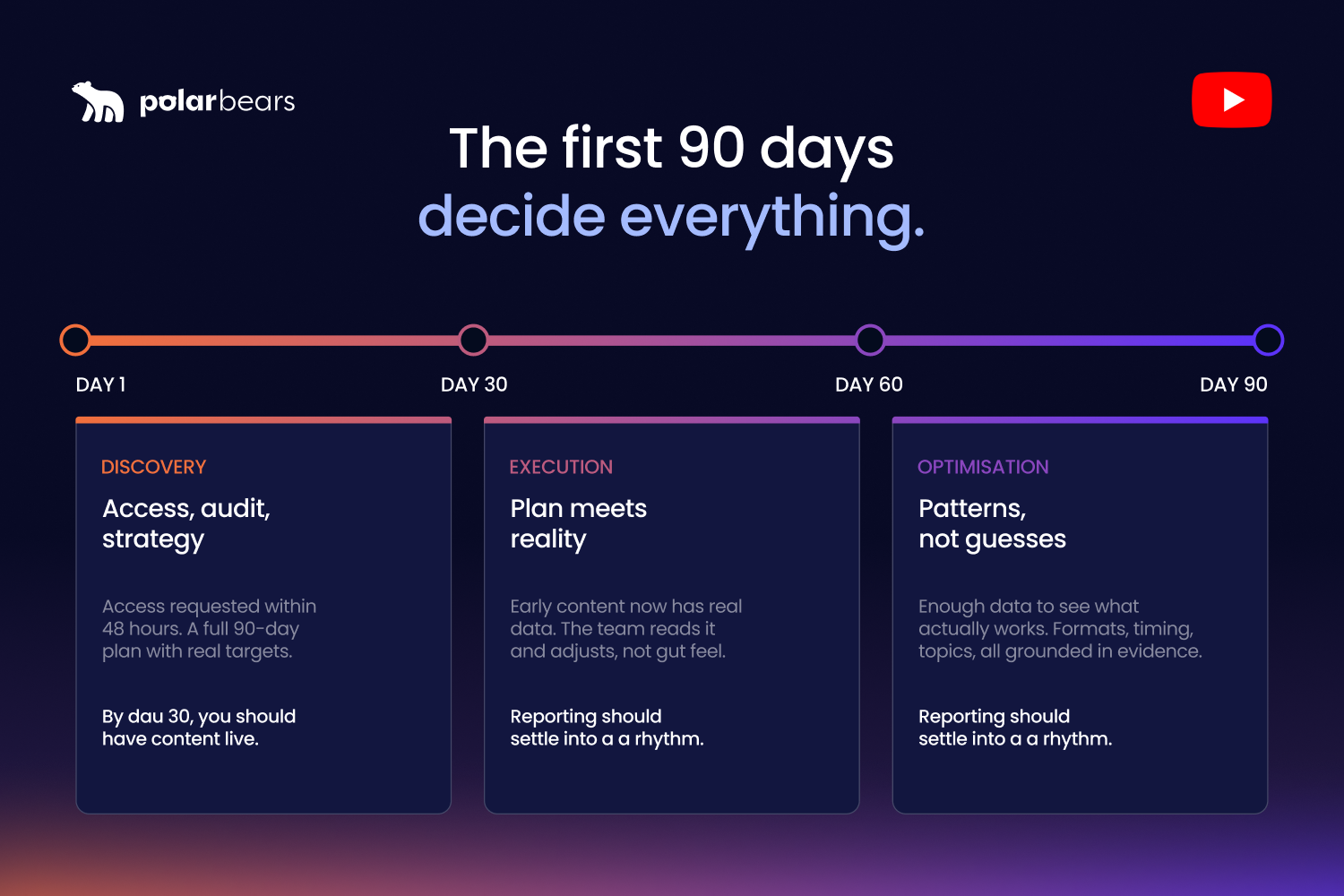
YouTube Agency Onboarding: What the First 90 Days Should Look Like
What a good YouTube agency does in the first 90 days, day by day, so you can tell early whether you hired well or made a mistake.
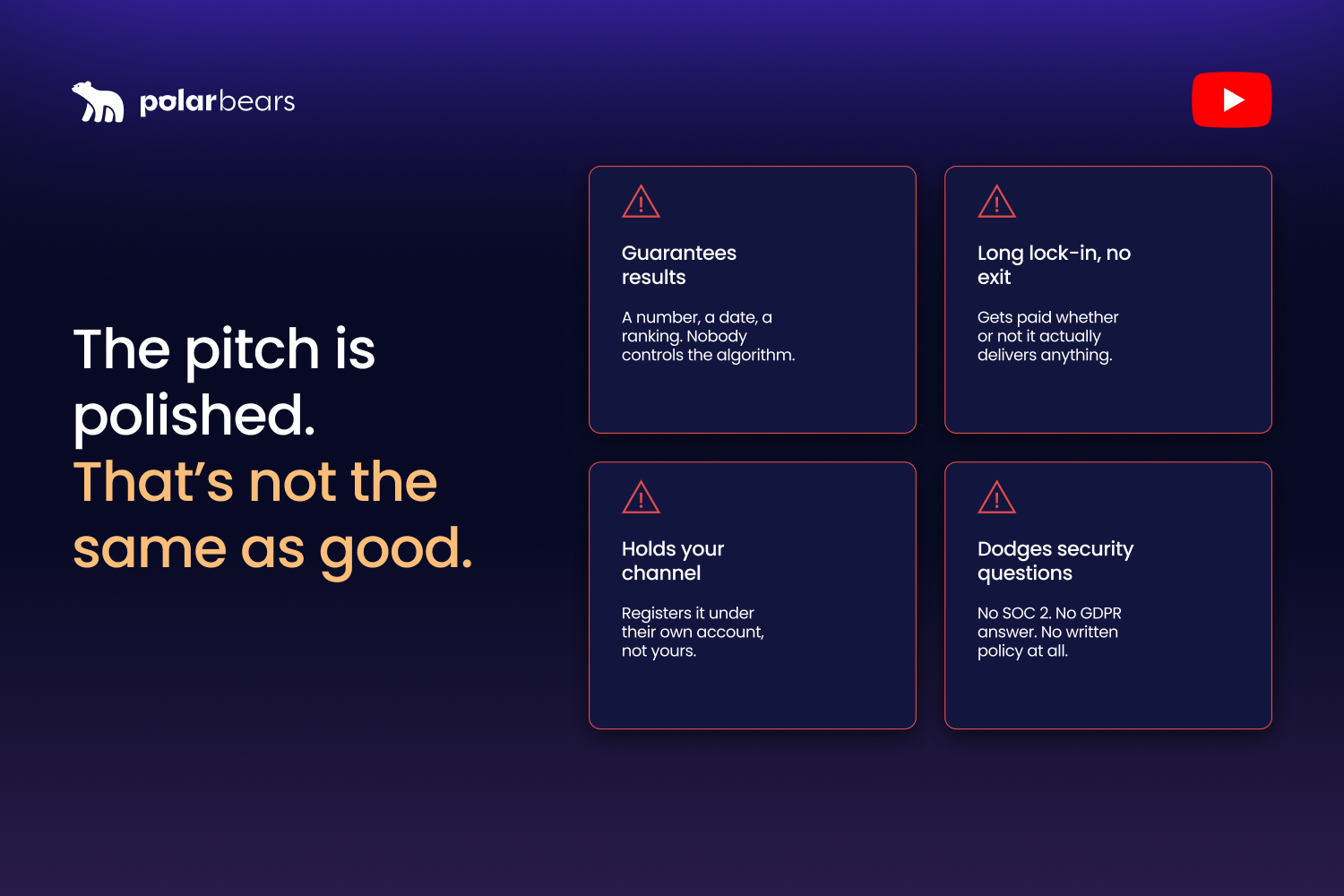
Red Flags When Hiring a YouTube Agency in 2026
The warning signs that separate a real YouTube agency from a money pit: lock-in contracts, guaranteed results, hostage data, and who really owns your channel.
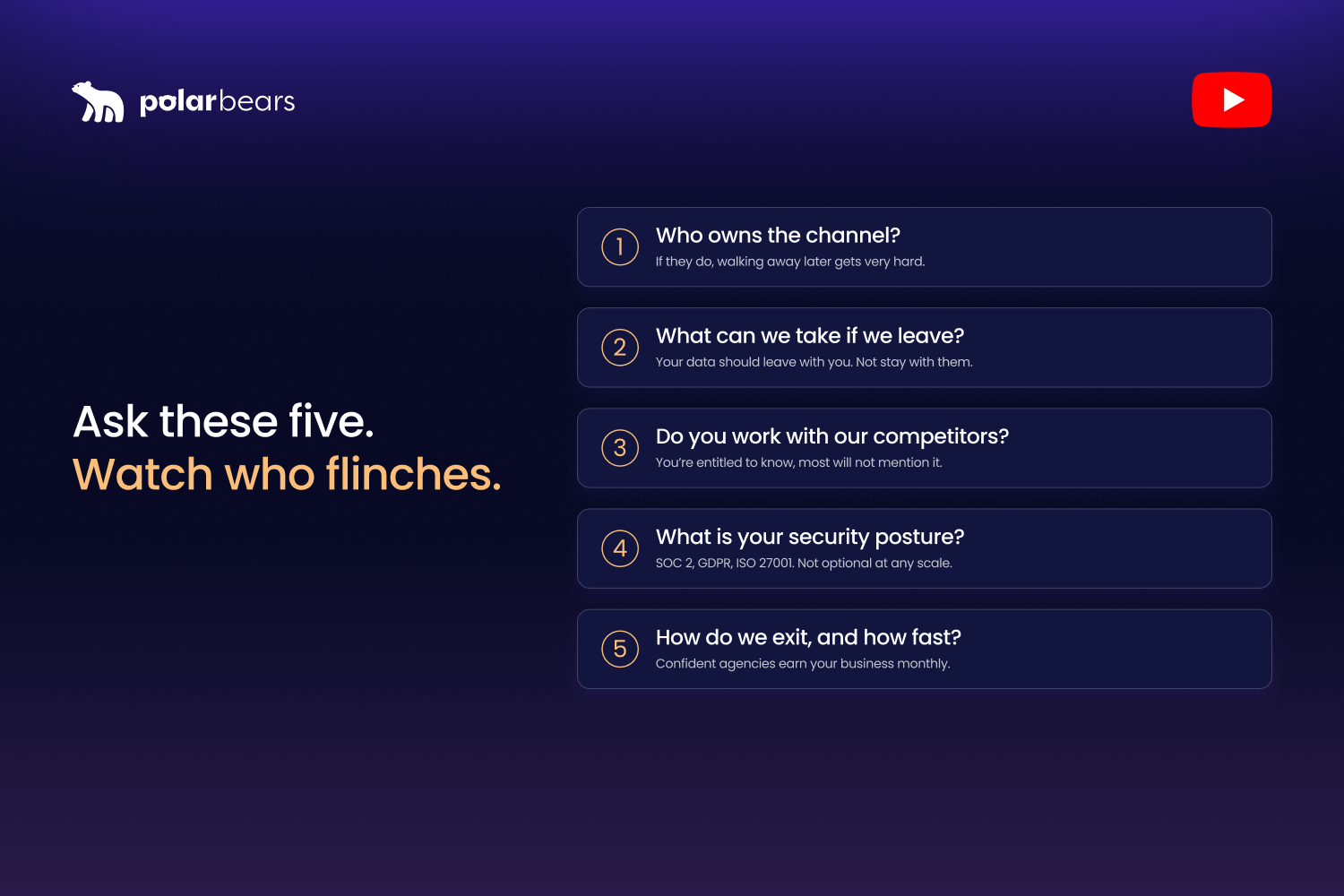
How to Vet a YouTube Agency: The 10 Questions That Actually Matter
The 10 questions that separate a real YouTube agency from a freelancer with a nice website, including the five most agencies hope you never ask.
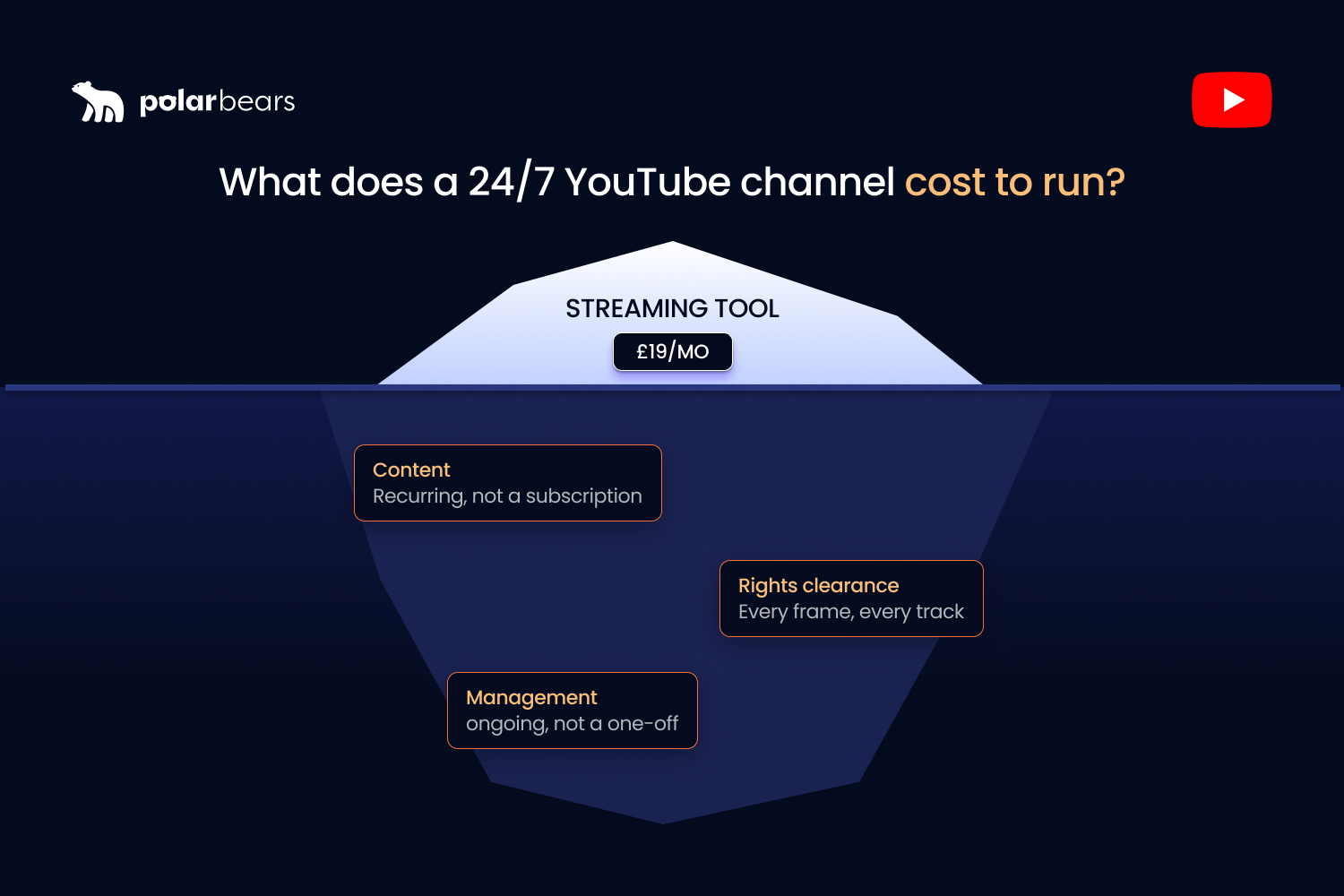
What It Actually Costs to Run a 24/7 Channel vs Standard Uploads
The real cost of an always-on YouTube channel vs standard uploads. Streaming is cheap. Content, rights and management are where the money goes.
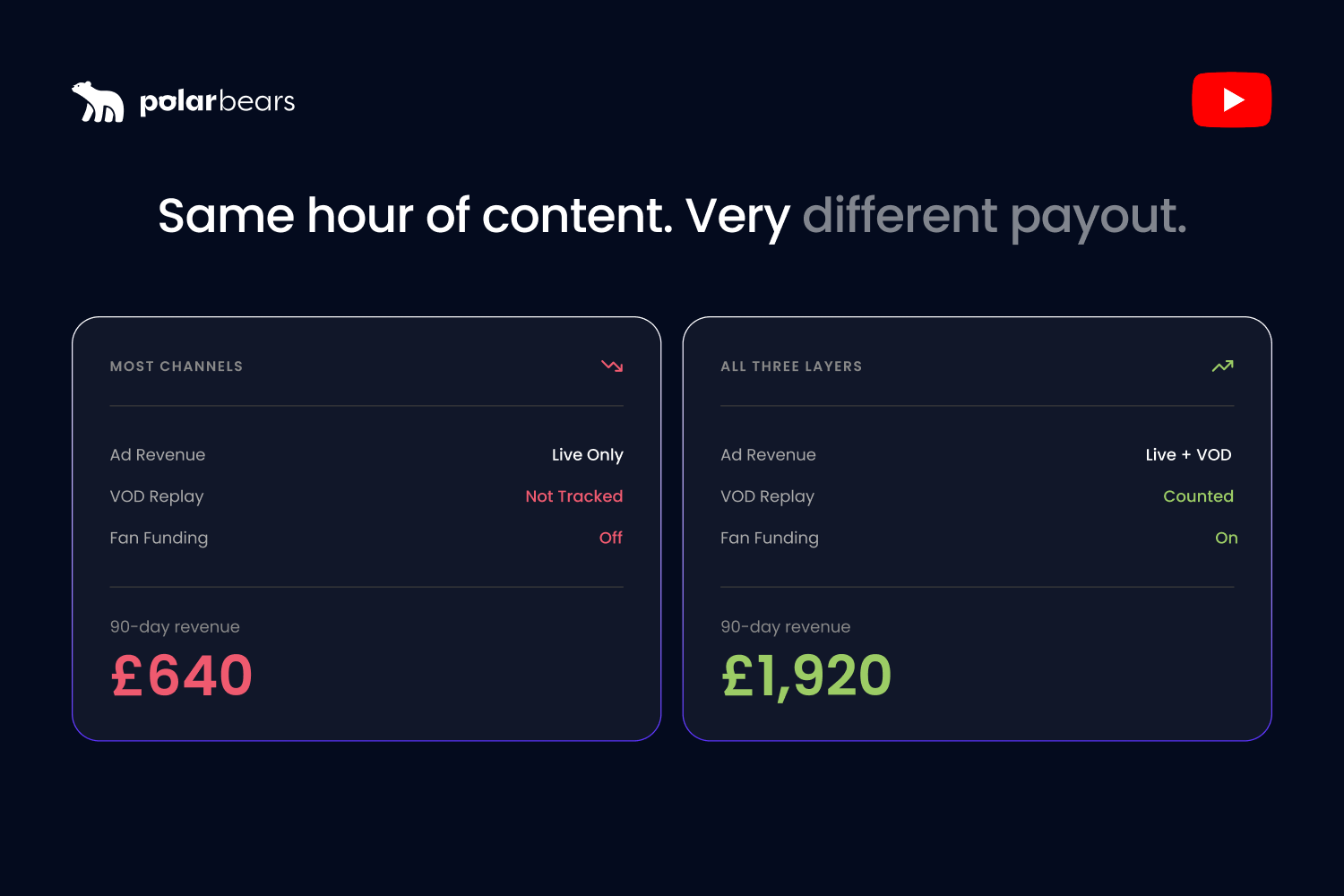
Monetising the Always-On YouTube Channel in 2026
How a 24/7 pre-recorded YouTube channel actually earns: ads on long streams, the VOD double-dip, fan funding, and the policy line that keeps it paid.

Ready to maximise your YouTube revenue?
Get in touch and let’s begin exploring your channel’s hidden potential.